
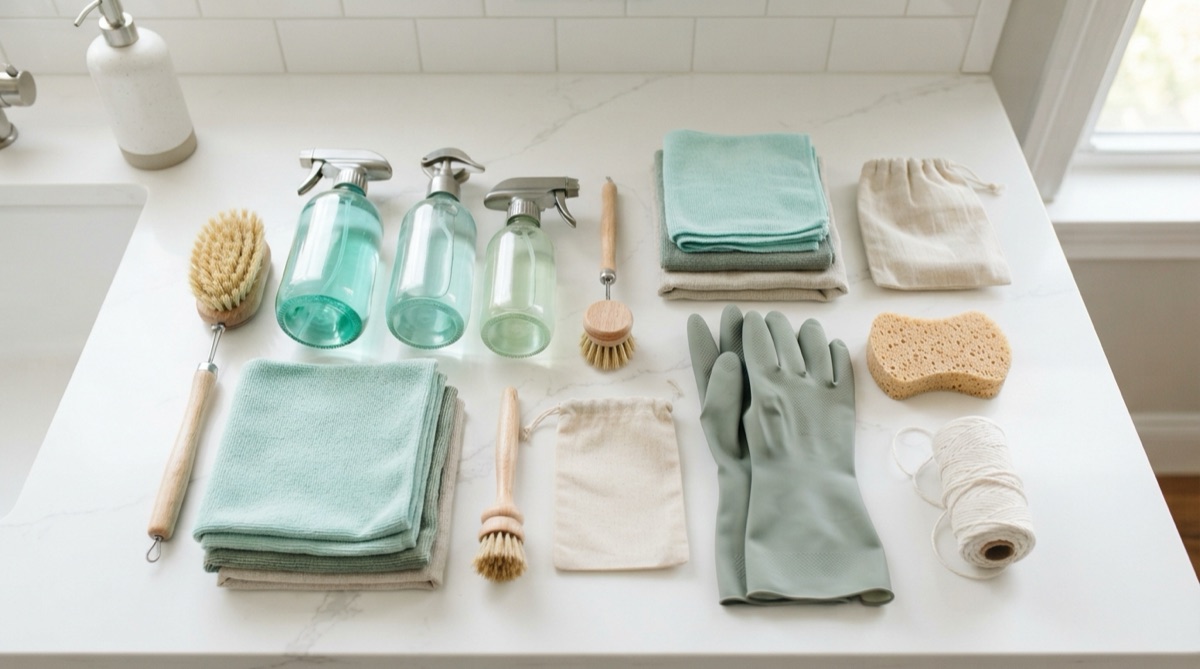
Build the 21-piece core before buying extras
A practical cleaning supplies list should cover daily wipe-downs, bathrooms, floors, dust, trash, and spills that cannot wait. You do not need a crowded cabinet to keep a home ready. Buy the core tools first, then add specialty products only for surfaces you actually own.
Key takeaways
- Keep the cabinet small: a daily cleaner, dish soap, glass cleaner, toilet cleaner, and one disinfectant cover most hard-surface jobs.
- Tools do the quiet work. Microfiber cloths, a real scrub brush, gloves, and a washable mop pad matter more than another spray bottle.
- Surface labels win. Stone, wood, electronics, carpet, and stainless steel can all reject the wrong cleaner.
- A stain kit belongs near the action, especially in homes with kids, pets, coffee, or red sauce.
- Skip heavy fragrance when indoor air is a concern; some cleaning products can contain VOCs, irritants, or flammable ingredients (American Lung Association).
- Refills beat duplicates.
The core cleaning supplies list that earns its shelf space
Think in jobs, not brands. Our crews run whole houses out of one caddy — cloths, two cleaners, two brushes, gloves — and the reason it works is that every item has a place and a job. If an item does not solve a common mess, leave it out until a label or surface calls for it.
| Job | Keep on hand | Why it earns space |
|---|---|---|
| Everyday hard surfaces | All-purpose cleaner, mild dish soap, glass cleaner | Counters, tables, fingerprints, mirrors, and light grease |
| Bathroom reset | Bathroom cleaner, toilet bowl cleaner, toilet brush, non-scratch scrub brush | Soap film, sinks, tubs, toilets, and fixtures |
| Safer germ control | EPA-registered disinfectant, disposable gloves | Sick days, raw-meat cleanup, toilet touch points, and high-risk messes |
| Floors and dust | Vacuum, broom and dustpan, mop with washable pads, microfiber cloths, extendable duster | Crumbs, pollen, baseboards, fan blades, and tracked-in soil |
| Spills and stains | Baking soda, white vinegar, enzyme cleaner, white towels | Odor, food spills, pet accidents, and quick blotting |
| Storage and trash | Bucket or caddy, trash bags, labels | Keeps products separated, dated, and easy to carry |
For task order, pair the kit with a room-by-room cleaning checklist. The list tells you what to do; this supply shelf gives you the tools to do it.
Product labels decide the safety line
Routine cleaning is the baseline. Water, soap, and scrubbing remove most germs and dirt before sanitizing or disinfecting is needed, and disinfecting is mainly for illness or higher-risk situations at home (CDC, 2025). Keep disinfectant, but do not use it as the answer for every crumb or fingerprint.
Read the label before you buy a specialty product. It tells you the surface, dwell time, ventilation needs, and whether gloves or eye protection make sense. If the label says to rinse, rinse. If it says the surface must stay wet for a set time, a quick swipe is not the same job.
For lower-toxicity store-bought choices, the EPA Safer Choice label means ingredients and performance are reviewed under federal criteria, and nearly 2,000 products qualify for the label. It is useful when you want a normal cleaner without guessing from green-looking packaging.
Kitchen supplies should handle grease and food risk
The kitchen needs fewer sprays than most people buy. Mild dish soap handles greasy counters, cabinet pulls, appliance fronts, and many food-prep surfaces when the finish allows it. A separate glass cleaner helps with windows, mirrors, and polished appliance fronts that streak with soap.
Keep disinfectant for cutting-board zones, sink areas, and counters after raw meat or illness. Clean first so food soil is gone, then use the disinfectant by its label. Store food-safe tools away from bathroom brushes and toilet supplies.
Add baking soda for light scrubbing inside sinks, on some pans, and around trash-can odor. Keep white vinegar for glass or mineral film only where acid is safe. Do not use it on natural stone counters, and do not mix it into bleach products.
Bathroom supplies need scrub, rinse, and dry tools
Bathrooms need a cleaner that can cut soap film, a toilet product, a toilet brush, gloves, and one non-scratch scrub brush. A squeegee is worth adding if shower glass or tile holds water after use. It is cheaper than buying stronger cleaners later.
Rocklin, Roseville, and Folsom homes can see hard-water marks around faucets, shower glass, and drain trim. A bathroom cleaner made for mineral film may be useful, but surface type still matters. Natural stone should be cleaned with neutral cleaner, stone soap, or mild dish detergent, because acidic products can dull or etch some stones (Natural Stone Institute).
Keep one old toothbrush or small detail brush for faucet bases, grout edges, and track corners. Label it clearly. No one wants a mystery brush beside the sink.
Floors and dust need reusable tools
A vacuum, broom, dustpan, mop, microfiber cloths, and an extendable duster cover most floor and dust work. Choose washable mop pads if you can. They save storage space and keep you from running out of disposable pads during a messy week.
Around Rocklin, hard-water film on fixtures makes a squeegee and a mineral-safe cleaner earn their spot faster than another all-purpose spray. Keep several microfiber cloths clean and dry so you can grab one for baseboards, fan blades, shutters, and window ledges. Wash them without fabric softener so they keep grabbing dust.
A simple daily, weekly, and monthly cleaning schedule helps you restock before the last trash bag or clean cloth is gone. Tape a small refill note inside the caddy if you share chores with family or roommates.
Stain supplies should be close and boring
Stain supplies are for first response. Keep white towels, baking soda, an enzyme cleaner for pet or food odor, mild dish soap, and a small spray bottle together. White towels matter because colored towels can transfer dye when you are blotting.
Use baking soda dry for light odor and grease pickup. Use vinegar only where the surface allows acid. Use enzyme cleaner when the label matches the mess, especially pet accidents, food odor, or vomit residue.
The best stain tool is usually patience. Blot, lift solids, use small amounts of cleaner, then dry the area. A soaked stain can become a pad problem, a wood problem, or a ring that looks worse the next morning.
Storage keeps the supplies list from turning into clutter
Store bathroom products away from kitchen products. Keep disinfectants away from kids, pets, food, and unlabeled bottles. If you dilute anything, label the bottle with the product, water amount, and date.
Put daily tools in one caddy and backup refills somewhere else. That keeps the working kit light. It also stops the common problem where three half-empty sprays sit under every sink.
Throw away bottles with missing labels. The same goes for products that changed smell, color, or texture. Guessing is not a cleaning method.
When stocking supplies is the wrong job
Supplies help when the work is small and repeatable. They are less helpful when the home needs a reset, the schedule is overloaded, or every room needs a different product and tool. At that point, the supply list is no longer the problem.
Elite House Cleaning keeps eco-friendly, non-toxic products standard for routine visits. If you would rather stop managing the caddy yourself, our housekeeping services can handle the recurring work while you keep only a small touch-up kit at home.
Restock on a schedule, purge the mystery bottles, and the kit stays useful. And if the caddy is organized but the cleaning still is not happening, that is the point where an estimate makes sense.