
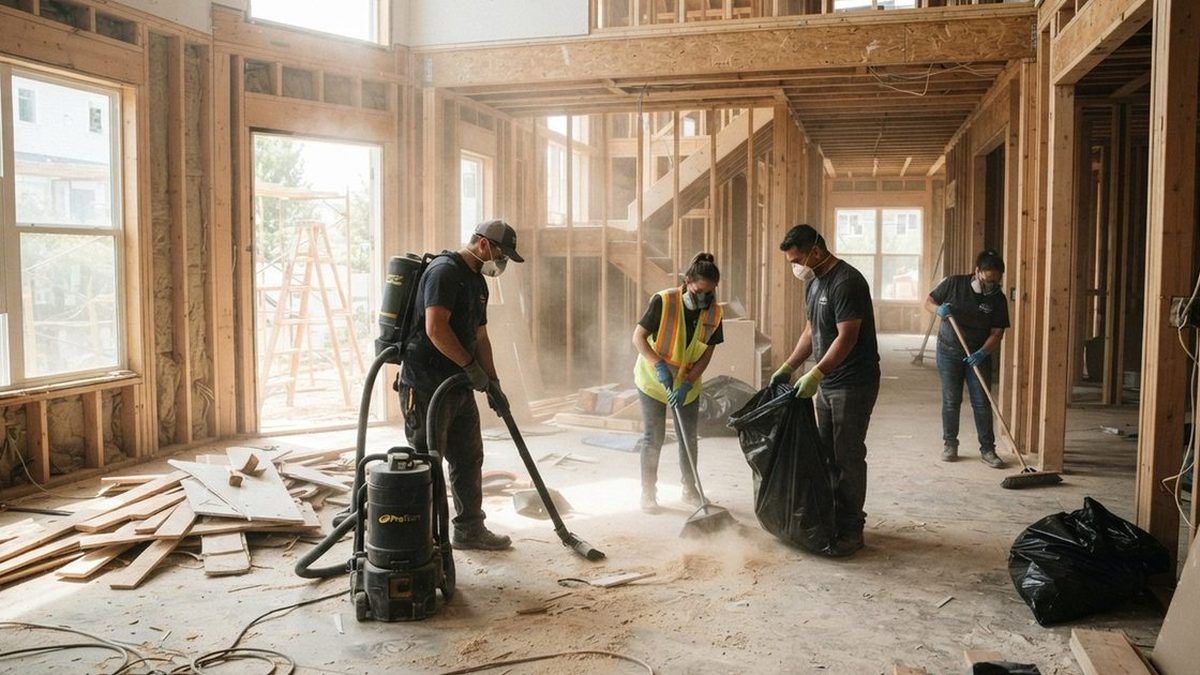
Quick answer: capture construction dust instead of spreading it
Construction dust can be much finer than common house dust. Some work can create respirable crystalline silica. Use 4 controls: stop the source, close the area, HEPA-vacuum loose dust, then damp-wipe hard surfaces. Follow the contractor’s dust-control plan.
Do not dry sweep fine mineral dust or use compressed air. OSHA limits those methods when safer options are feasible. If the material is unknown, pause cleanup. Ask what was cut, drilled, sanded, or ground.
Construction dust is not one material
Everyday house dust is a mix of fibers, soil, pollen, skin flakes, and small particles that enter or form indoors. Construction dust is different: it forms fast, in large amounts, from cut and sanded building materials.
Construction dust starts with a task and a building material. Drywall and joint-compound sanding make soft powder. Wood cutting makes sawdust and finer particles. Tile, concrete, mortar, brick, block, grout, and stone can create mineral dust. Paint or coating removal can add other hazards.
The cleanup method must fit the source. A gray pile cannot identify its contents. The contractor should name each disturbed material. Dust-making work must stop before normal final cleaning starts.
What is respirable crystalline silica?
Crystalline silica is a mineral in stone, sand, concrete, mortar, and brick. Cutting, sawing, grinding, drilling, or crushing these materials can release small particles. That is 5 common materials and 5 dust-making tasks.
“Respirable” means the particles are small enough to travel deep into the lungs. OSHA says breathing this dust can raise a worker’s risk of silicosis, lung cancer, chronic obstructive pulmonary disease, and kidney disease. The risk is tied to exposure, so controlling dust where it starts is the first step.
You cannot confirm silica by looking at gray or white film. Ask which material and tool created it. Concrete, mortar, brick, block, stone, and engineered stone need clear answers. The contractor should explain source controls and cleanup duties.
Why source control comes before cleaning
Cleaning while a saw, grinder, or drill runs does not control the source. New particles keep entering the air. They also land on cleaned surfaces.
OSHA points to 2 control types: water at the cutting point and tool-matched dust collection. Covered employers also need a written exposure control plan. A named competent person must carry it out.
For a home project, ask the contractor:
- Which materials created the dust?
- Which tasks may have made silica-containing dust?
- What dust collection was used?
- Who owns final dust removal?
- Is testing or specialist cleanup needed?
Do not remove barriers before the contractor releases the work zone. Dust-making work and required cleanup must be complete. Opening 1 plastic wall can move particles into clean rooms. A fan can do the same.
Why dry sweeping and compressed air are poor choices
A broom can lift floor dust and spread it through a room. Compressed air turns settled dust into a cloud. Both methods can move particles onto vents, registers, baseboards, and window tracks.
OSHA’s silica construction rule limits dry sweeping and dry brushing when they could add exposure. Those methods may be used when dust-limiting options are not feasible. Options include wet sweeping and HEPA-filtered vacuuming. OSHA also limits compressed-air cleaning when another feasible method exists and the dust cloud is not captured.
These workplace rules support 1 simple rule: capture settled dust instead of lifting it into the air.
How HEPA filtration helps
HEPA means high-efficiency particulate air. A true HEPA filter traps very small particles in the vacuum’s airflow. The full machine must suit the job. Seals, bags, filters, and maintenance all matter.
A filter label does not make every vacuum right for construction dust. Fine powder can clog equipment or escape around poor seals. Hazardous cleanup may need more than a normal cleaning kit.
On a cleared site, keep the vacuum head near the surface. Use crevice tools at baseboards, cabinet corners, and window tracks. Maintain bags and filters as directed. Keep children, pets, and other people away.
Elite House Cleaning uses HEPA vacuums for its post-construction cleaning service. That does not replace a contractor’s duty to control active construction dust or a specialist’s role when a regulated hazard is present.
Why damp wiping comes after vacuuming
A thin film often remains after vacuuming. A damp microfiber cloth can lift it from hard surfaces. Light moisture helps the cloth hold particles. It also limits dust movement.
Order matters. Wetting a thick layer can create paste and push residue into seams. It can also leave streaks. Use 3 passes: HEPA vacuum, damp wipe, then a clean cloth face.
Follow these steps on surfaces approved for damp cleaning:
- Vacuum loose dust from high areas to low areas.
- Fold a clean microfiber cloth into several usable faces.
- Dampen the cloth; do not soak it.
- Wipe a small area in one direction.
- Turn to a clean face before it loads with dust.
- Repeat, then dry moisture-sensitive finishes.
Use the least aggressive product that works. Fresh paint, natural stone, unsealed grout, hardwood, stainless steel, and coated glass each need material-safe care.
Keep dust from reaching the rest of the home
Close the work zone as directed and use 1 entry path. Keep children, pets, and other people away. A rough construction cleaning visit for dust control can help after heavy work pauses. The contractor must release the site first. Cleaning should not happen beside active silica-generating tasks.
Fine dust may resettle for 1-2 weeks after crews leave. Check horizontal surfaces before final and touch-up cleaning. Sills, dark counters, glass, and floor edges show new film quickly.
Know when to stop and call qualified help
Stop normal cleaning when the dust source is unknown. Stop when the contractor reports a regulated hazard. Silica is not the only concern. Older paint may create lead dust. Some older materials may contain asbestos. Mold, sewage, chemical spills, and sharp debris need different plans.
Pause and ask for direction when:
- Dust came from concrete, mortar, brick, block, or stone cutting and controls are unclear
- A worker is still drilling, grinding, sanding, or sawing nearby
- The work disturbed old paint or an unknown insulation, tile, or coating
- Dust moved into ducts or occupied rooms beyond the work zone
- People report breathing trouble, chest symptoms, or eye irritation
- The cleanup requires respirators or hazard testing
For symptoms or a possible exposure, leave the area and seek medical advice. A cleaning article cannot measure exposure or diagnose illness.
Make dust safety part of the project handoff
Construction dust and silica concerns begin with the work that made the dust. The contractor should control the source and name the materials. The contractor must also release a safe site. Cleaning can then follow the rough, final, or touch-up level. HEPA vacuuming comes before damp microfiber wiping.
Elite House Cleaning is a woman-owned, insured and bonded company in Rocklin, CA. Since 2015, it has served 29 Sacramento-area cities. They include Roseville, Sacramento, Folsom, and Granite Bay. The team uses HEPA vacuums and eco-friendly, non-toxic products. Call (916) 407-1010 to discuss a cleared site and its cleaning stage.