
Quick answer: use it for broad touch-point coverage
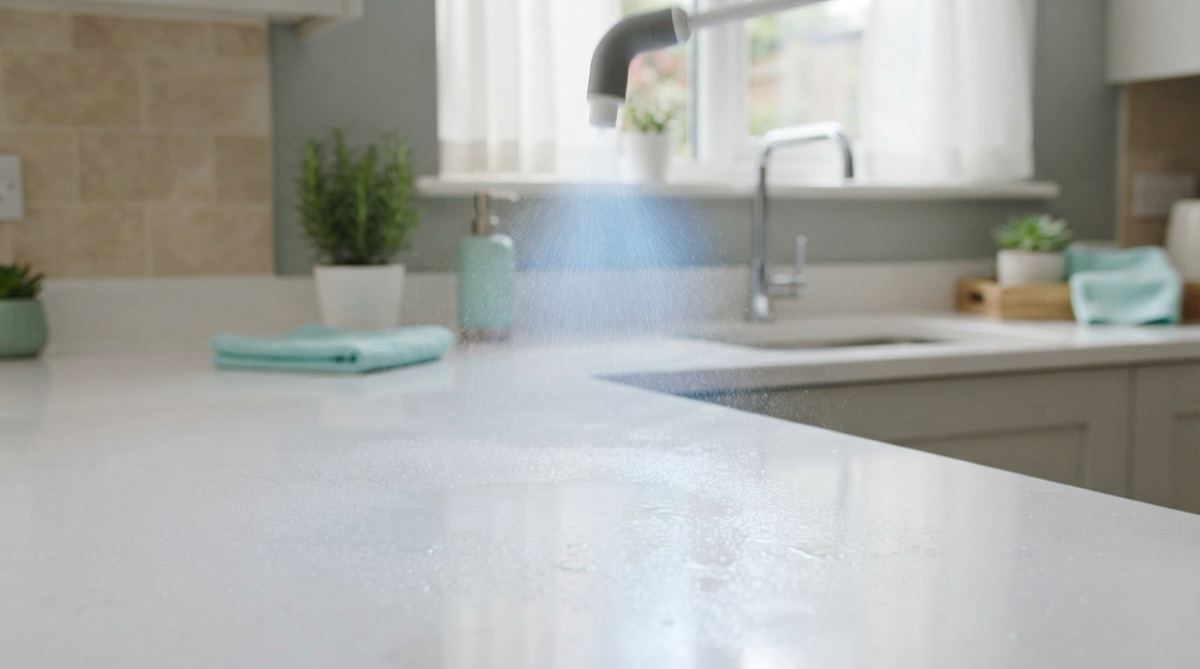
For homes, electrostatic cleaning is a disinfecting method that charges disinfectant droplets so they are drawn toward hard, non-porous surfaces instead of landing only where the sprayer points. It is worth it when you need fast, even coverage across many touch points, such as after illness, before a move-in, or in a busy office — and only with a product whose label allows electrostatic spray, since EPA has not evaluated application methods that are not on the label. It is overkill for normal weekly cleaning.
The method is best after a real germ concern. It does nothing for dust, soap scum, mold, odors, or sticky kitchen film. In Rocklin and Roseville homes, we see it work best after the regular cleaning is already done and the goal is a final disinfecting pass.
Key takeaways
- Electrostatic disinfecting adds a charged mist to hard, non-porous surfaces, which helps cover knobs, switches, rails, counters, and fixture handles.
- It works after cleaning. Dirt, grease, hard water film, and soap scum can block a disinfectant from touching the surface.
- The label matters. An EPA FAQ says the spray method should be listed on the disinfectant label, or safety and performance have not been evaluated for that use.
- Contact time matters as much as coverage. The surface has to stay wet long enough for the product to work.
- Skip it for mold. If you are unsure what is growing in a bathroom or laundry area, start with our mold vs. mildew guide.
- Keep people and pets out of the room while spraying, then let surfaces dry and air out before normal use.
How the charged spray works
An electrostatic sprayer gives disinfectant droplets a charge as they pass through the nozzle. Those charged droplets are drawn toward surfaces, including side edges and curves that a flat spray can miss.
Think of chair backs, toilet handles, faucets, stair rails, cabinet pulls, appliance handles, and light switches. A hand wipe can disinfect those areas too, but it takes more time and can miss the back side of a handle when the cleaner is moving fast.
EPA’s registration guidance describes the same basic idea: charged antimicrobial droplets are attracted to environmental surfaces and can improve coverage on hard, non-porous surfaces. That same guidance calls for details like spray distance, contact time, and a droplet size of at least 40 micrometers when electrostatic directions are added to a product label.
That last point is easy to miss. The sprayer is only one part of the system. The disinfectant, the label, the surface, and the operator all matter.
What electrostatic cleaning can and cannot do
Electrostatic disinfecting can help reduce germs on surfaces that have already been cleaned. It does not remove crumbs, dust, pollen, grease, hair, soap residue, mineral film, or body oils by itself.
That is why a good service starts with normal cleaning. In any home that has been closed up through a hot week, a fine film settles on counters, baseboards, and entry tables. Spraying disinfectant over that layer just gives you wet dust.
It also does not fix mold or mildew. Mold needs moisture control and physical removal first. If the bathroom fan is weak, grout stays wet, or a laundry area has a leak, disinfecting is just a short pause before the growth comes back.
For bathrooms, a better order is clean, descale where needed, remove soil, then disinfect high-touch and splash zones. That is the same reason our bathroom sanitizing service focuses on the toilet, sink, faucet handles, counters, shower touch points, and the floor area around fixtures.
Where it beats hand wiping
Hand wiping is still the right tool for many jobs. It gives friction, lifts soil, and lets the cleaner see what changed. Electrostatic spraying is stronger when the problem is coverage across many cleanable touch points.
| Situation | Good fit? | Why |
|---|---|---|
| After a stomach bug, flu, or COVID case | Yes | Many shared touch points need a final disinfecting pass. |
| Move-in after unknown tenants | Yes | Cabinets, handles, switches, rails, and bathroom fixtures can be reset quickly after cleaning. |
| Weekly tidy-up | Usually no | A normal clean handles dust, crumbs, and daily soil better. |
| Moldy shower grout | No | Moisture control and removal come first. |
| Greasy kitchen cabinets | No | Degreasing and wiping are needed before any disinfectant can work well. |
| Small office or salon reset | Yes | Many people touch the same door handles, chair arms, counters, and switches. |
If you are turning over an apartment in Roseville, Lincoln, or Sacramento, disinfecting can make sense after the heavy work is done. Use our move-out cleaning guide for the room-by-room cleaning pass, then decide whether the space needs a disinfecting finish.
When it is worth adding
Add electrostatic disinfection when the surface risk is real and the room has many hard touch points. It is usually a good add-on after illness, before hosting an immune-sensitive guest, after a tenant move-out, or when a small workplace needs a reset.
It can also help in bathrooms, laundry rooms, playrooms, home offices, and entry areas. Those rooms collect hand contact fast. Door edges, light switches, remotes, railings, faucet handles, appliance controls, and toilet handles are easy to overlook one by one.
For homes with babies, older adults, or immune-sensitive family members, ask what product will be used and how the space will be aired out. Elite House Cleaning uses background-checked, insured cleaners, and eco-friendly non-toxic products are our standard for regular cleaning. Disinfecting products are chosen for the job and label directions, so they should be discussed before service.
When a normal clean is the better call
A normal clean is the better call when the home is dusty, cluttered, sticky, or visibly dirty. Disinfectant has a hard job when it has to fight through soil first.
Choose cleaning first for:
- Kitchen grease on cabinet pulls and appliance handles.
- Bathroom hard water spots on faucets and glass.
- Soap scum in tubs and showers.
- Dusty blinds, baseboards, and ceiling fan blades.
- Crumbs, pet hair, and floor debris.
- Laundry buildup around hampers, machines, and folding areas.
If the house has not had a reset in months, start with cleaning. Then add disinfecting only where it has a clear purpose. Our eco-friendly cleaning page explains how we handle routine soil with safer product choices before any stronger disinfecting step is considered.
The 7 checks that make it safer
Electrostatic spraying is still chemical application. A safe service is boring in the best way: label checked, surfaces cleaned, people out, dwell time followed, and rooms aired out.
- Check the product label. The label should allow the surface type and spray method being used.
- Pre-clean visible soil. EPA’s six-step disinfectant sheet says to pre-clean when the label calls for it or when the surface is visibly dirty.
- Confirm the target surfaces. Hard, non-porous surfaces are the main fit. Soft goods, unfinished wood, and delicate finishes need more care.
- Remove people and pets. No one should be in the room during application.
- Keep surfaces wet for contact time. If the surface dries too soon, the disinfectant may need to be applied again.
- Ventilate before re-entry. Open windows or run fans when the label allows it, then wait until surfaces are dry.
- Store products safely. Lids should be tight, and disinfectants should be out of reach of children.
A 2020 CDC report found 45,550 cleaner and disinfectant exposure calls to poison centers from January through March 2020, up 20.4% for cleaners and 16.4% for disinfectants from the same months in 2019. Inhalation exposure calls for disinfectants rose 108.8%, which is a good reminder that more spray is not safer spray.
How to choose the right disinfectant
The disinfectant should match the surface, the germ concern, and the application method. Do not judge it by scent. A strong smell does not prove better disinfection.
For coronavirus-specific concerns, the EPA List N page says listed products are expected to kill SARS-CoV-2 strains and variants when used according to label directions. For other concerns, the label should name the relevant organism or product claim.
Here is what to ask before service:
- What product will be used?
- Is electrostatic spray listed on the label directions?
- What surfaces can it be used on?
- What contact time is required?
- Does the surface need to stay wet the whole time?
- How long before kids, pets, or guests can re-enter?
- What should be moved before the appointment?
If the answer is vague, pause. A pro should be able to name the product, explain the rooms, and tell you what has to happen before people come back in.
What homeowners should move first
Clear the surfaces you want disinfected. That means counters, desks, bathroom vanities, kitchen islands, nightstands, and entry tables.
Move food, toothbrushes, pet bowls, baby bottles, medication, paperwork, and open laundry. Put away anything that should not get damp. Electronics should be handled by their care instructions, not misted unless the label and device maker allow it.
For Sacramento-area move-outs, this step is often where time gets lost. Boxes sit on counters, bathroom drawers stay full, and closet shelves are blocked. A clear room lets the cleaner finish the normal clean first and makes the disinfecting pass faster.
What happens during a good service
A good service has a simple order. It starts with a walk-through, then cleaning, then disinfecting, then dry time.
First, the cleaner checks the rooms, surfaces, and any sensitive items. Next, visible soil is removed. Bathrooms, kitchens, laundry areas, and entry zones usually need the most prep.
Then the disinfectant is applied in a steady pass across the approved hard surfaces. The operator should avoid over-wetting, puddles, soft fabrics, food-contact items, and delicate finishes unless the label allows them.
After that, the room needs time. Contact time is the period when the surface stays wet so the disinfectant can work. Drying too fast is one of the most common ways a disinfecting job fails.
Common mistakes to avoid
The most common mistake is spraying everything. More coverage is useful only on the right surfaces. Finished wood, natural stone, unsealed grout, electronics, fabrics, and food-contact surfaces may need special handling.
Mixing products is also risky. Bleach, ammonia, vinegar, alcohol, and other cleaners can create unsafe fumes when combined. If a room already smells like chemicals, stop and air it out before adding anything else.
Last, do not rush the return. If the room is still wet, strong-smelling, or poorly aired out, wait. That matters more in small bathrooms, laundry rooms, and apartments with limited airflow.
Final take
Electrostatic disinfection is worth it when you need an even disinfecting pass across many clean, hard touch points. It is not a shortcut around scrubbing, dusting, degreasing, mold removal, or label directions.
Let the label set the rules, and save the sprayer for the moments that earn it. If you want help deciding whether electrostatic cleaning makes sense for your Rocklin, Roseville, Sacramento, Folsom, Elk Grove, Granite Bay, or Lincoln home, get a free estimate.