
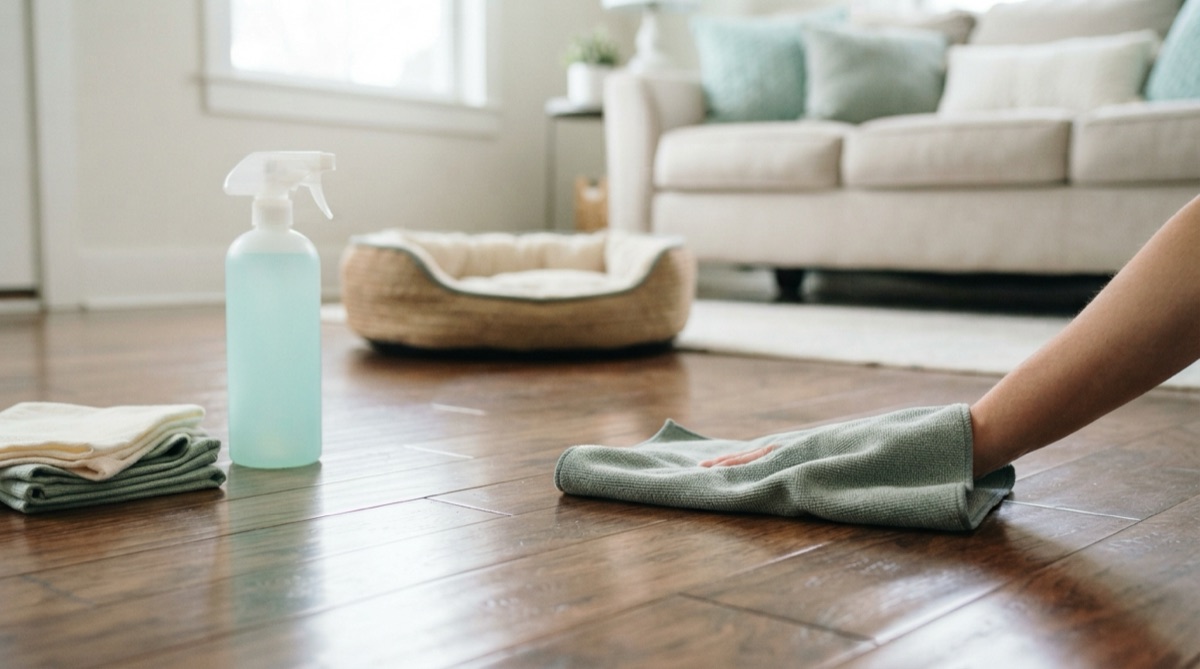
The 7-step fix: blot, enzyme, dry, and recheck
Cat urine smell on hardwood floors comes out best when you treat the finish gently and keep liquid out of the seams. Blot first, use a pet enzyme cleaner marked safe for finished wood, dry the area fully, then smell-check it again after the room warms up.
Key takeaways
- Fresh urine is a surface job until it reaches seams, scratches, or worn finish.
- Blot with pressure. Rubbing spreads odor into board edges.
- Enzyme cleaner needs contact time, but hardwood still cannot be soaked.
- Skip ammonia, vinegar, wet mops, and steam.
- A dark stain is a floor-finish problem as much as an odor problem.
First, check what kind of wood problem you have
Start by looking at the finish, not the smell. A clear-coated hardwood floor can often handle a careful spot treatment. Worn, raw, waxed, oiled, or gapped boards are much easier to damage with liquid.
Run your fingers across the spot. If the finish feels smooth and the urine is fresh, you have a better chance of removing the odor at home. If the area feels raised, gray, black, rough, sticky, or soft, the urine may have gone under the finish.
The National Wood Flooring Association says spills should be cleaned right away with a dry or slightly damp cloth, and that wet mops and steam mops can damage the finish and the wood. That is the whole lane for this job: enough moisture to treat odor, never enough to flood the boards.
The 7-step hardwood cleanup
Use this method before you try stronger products. If the floor is antique, unsealed, waxed, or already peeling, stop after blotting and call a flooring pro.
- Put pets in another room. Cats may step in cleaner, lick paws, or return to the same marked area before the odor is gone.
- Blot with white towels. Press straight down for 30 to 60 seconds, switch to a dry towel, and repeat until the towel comes up nearly dry.
- Wipe once with a barely damp cloth. Use cool water only, then dry the boards right away. This removes surface residue without carrying urine into nearby seams.
- Test the cleaner in a hidden spot. Pick an enzyme product that names finished wood or hard floors on the label. Wait for the test area to dry before using it on the stain.
- Apply a light, controlled amount. Mist the towel or the spot lightly, then press the cleaner onto the odor area. Do not pour cleaner between planks.
- Give it the label time. Pet odor products work by contact, so wiping too soon can leave odor behind. Keep the area damp only as long as the label allows for that surface.
- Dry hard. Use clean towels, a fan, and open room airflow. Check again after the floor has been dry for several hours.
If the accident started on a rug over hardwood, lift the rug after blotting and protect the floor before adding any cleaner to the rug. Our carpet stain removal guide covers the soft-surface side of the same accident.
Why enzyme cleaner is the usual first pick
Cat urine odor is stubborn because perfume does not remove the odor source. The spot has to be neutralized so the cat does not keep reading it as a bathroom area.
The ASPCA recommends cleaning pet accidents with an enzymatic cleanser made to neutralize pet odors. That does not mean every enzyme bottle belongs on hardwood. It means the product type fits the urine problem, while the floor label decides whether it fits your boards.
Use less product than you would on carpet. Hardwood has seams, bevels, nail holes, worn edges, and old scratches. Any of those can pull liquid below the finish.
What to avoid after cat urine hits wood
Do not use ammonia. Urine contains ammonia-like odors, and the ASPCA warns that ammonia-based cleansers can attract a cat back to the same spot.
Do not use vinegar as a hardwood shortcut. Cornell University College of Veterinary Medicine says cat-soiled items need odor neutralizing rather than deodorizing, and it warns against ammonia or vinegar because those smells can resemble urine and irritate cats.
Skip bleach, steam, hot water, and strong floor degreasers too. Heat can set odor in soft materials, and steam is too much moisture for hardwood seams. If the same accident also hit carpet, the no-heat approach in our guide to cleaning vomit out of carpet is the safer pattern.
Why the odor comes back later
Urine smell often fades while the floor is wet, then comes back when the room dries or warms. That usually means odor is still in a seam, under a rug, below a threshold, or in the raw edge where the finish is worn.
Sacramento-area homes can make that cycle more obvious. Grit collects along floor edges near sliders and pet doors. If urine lands there, the mess can sit in a dirty seam before anyone sees it.
Sniff low and close after the floor is dry. Check the quarter round, baseboard edge, rug pad, nearby chair legs, and any floor vent. A small blacklight can help find old splatter, but it does not tell you whether the floor is safe to wet.
When stains mean the floor needs repair
Cleaning handles odor on top of a sound finish. It cannot pull urine back out of raw wood once the boards have absorbed it.
Watch for these signs:
- Gray, black, or greenish staining
- Cupped, raised, or rough board edges
- Odor that returns after two careful enzyme treatments
- A sticky spot that never feels clean
- Finish that flakes, turns cloudy, or wipes off on the towel
At that point, more cleaner can make the repair bigger. A flooring professional may need to screen and recoat the finish, sand deeper, treat the subfloor, or replace a board. If the urine reached the wall line, the baseboard may need attention too.
Keep the cat from choosing that spot again
A clean floor is only part of the fix. Repeated cat urine on hardwood can point to stress, litter box dislike, another animal blocking access, or a health problem.
If this is new behavior, call your veterinarian. Painful urination, urgency, kidney issues, and other medical problems can make a cat miss the box. Cleanup should happen the same day, but the cause matters if it keeps happening.
Keep the cleaned area boring while it dries. Block it with a chair, close the room, or place a washable mat there once the floor is fully dry. Do not cover damp wood with plastic, a rug, or a litter mat.
For Rocklin-area homes with pets
Pet odor on hardwood floors needs a lighter hand than tile or vinyl. The goal is to remove the source without stripping finish, soaking seams, or leaving a heavy fragrance trail.
For routine pet zones, our pet-friendly cleaning uses eco-friendly, non-toxic products where the floor, fabric, and odor source allow. That kind of visit can help with hair, dander, litter dust, paw marks, and washable surface odor around the accident area.
It is still worth separating cleaning from repair. House cleaning can make the surrounding room feel fresh again, but damaged hardwood may still need a flooring specialist.
A clean floor should not smell like perfume
The right result is boring: no wet edge, no sticky film, no perfume cloud, and no urine smell when the room warms up. If the odor is still there after careful blotting, a wood-safe enzyme pass, and full drying, the urine is probably below the easy-clean layer.
Old accidents are detective work: floor type, stain age, and product history decide whether cleaning or refinishing wins. A free estimate sorts that out faster than another bottle from the pet aisle.