
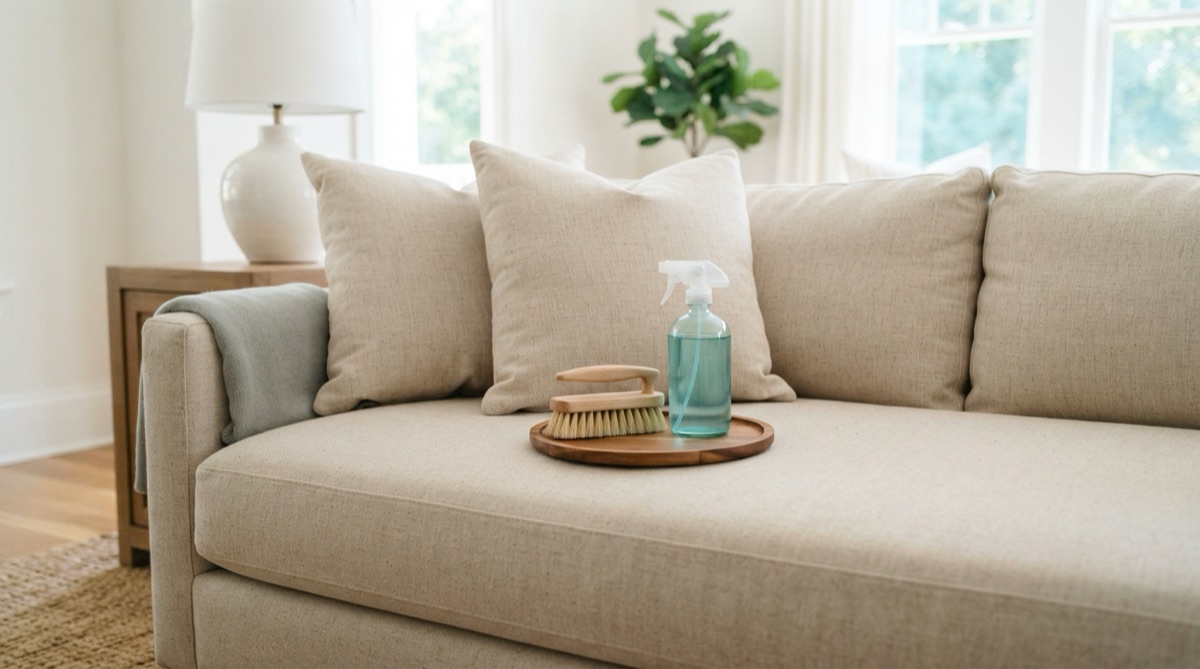
The safe order is tag, test, lift, and dry
The safest way to clean a fabric sofa is to read the care tag, test a hidden spot, vacuum loose dirt, spot clean gently, and dry it fast. Most fabric damage comes from soaking the cushion, scrubbing the weave, or using a cleaner the tag does not allow.
If the tag is missing, start as if the fabric is delicate. A slow test in a back corner is cheaper than a pale ring across the seat cushion.
Key takeaways
- Check the tag first. Common sofa codes include W, S, W/S, and X, and each one changes what cleaner is safe (Good Housekeeping).
- Remove dry soil before liquid. Dust, crumbs, pet hair, and dry pollen turn muddy when you wet them.
- Blot spills from the edge inward. Rubbing spreads color and pushes the stain deeper.
- Use less water than you think. EPA mold guidance says wet items should dry within 24-48 hours to help prevent mold growth.
- Speed up drying with airflow. A fan, open interior doors, and lifted cushions help moisture leave the fabric.
Decode the tag before any cleaner touches fabric
Care tags usually hide under a cushion, under the platform, or on the sofa base. The W/S/X codes are a furniture-industry standard — manufacturer care guides like La-Z-Boy’s use the same system — and that tag should lead the job.
| Code | Safe first move | What to avoid |
|---|---|---|
| W | Water-based upholstery cleaner or light soap suds | Soaking the cushion |
| S | Solvent-based cleaner or professional cleaning | Water-based cleaner |
| W/S | Water-based or solvent cleaner after a spot test | Mixing methods on one stain |
| X | Vacuuming or brushing only | Liquid cleaner and home shampooing |
No tag means no shortcuts. Test a hidden seam with a barely damp white cloth, wait for it to dry, then check for color transfer, rings, stiffness, or texture change.
The 5-step low-water clean
This method works best for routine sofa fabric cleaning when the tag allows water or W/S cleaning. If you are resetting the whole living room, pair the sofa with a broader room-by-room deep cleaning plan so dust does not settle back onto clean fabric.
- Clear and inspect. Remove pillows, throws, toys, remotes, coins, and anything tucked in the cracks. Look for zippers, loose buttons, worn seams, and old stains before you add moisture.
- Vacuum slowly. Use the upholstery tool on cushions, arms, back panels, seams, and the platform under the cushions. Dry-season Rocklin dust and open-window pollen often hide where the back meets the seat.
- Test your cleaner. Put a small amount on a white cloth, touch a hidden spot, and let it dry. Keep going only if the color, feel, and shape stay the same.
- Spot clean with light pressure. Dab the stain with a damp cloth or soft brush, then lift loosened soil with a second cloth. Work in small patches so the fabric never feels wet below the surface.
- Dry before use. Blot with dry towels, lift cushions if possible, and run a fan across the room. CDC home guidance says soft surfaces should be cleaned with products made for those surfaces and dried completely.
Expect 2-4 hours of drying time with a fan running, longer for thick cushions or humid days — plan the clean for a morning so the seat is usable by evening. The finished sofa should feel dry, smell neutral, and show no darker damp areas. If a cushion still feels cool or heavy, keep it out of direct sun and give it more air time.
If the cushion covers have zippers and the care label allows machine washing, wash them cold on gentle, close the zippers first, and air dry them back on the cushions so they keep their shape. Never machine-dry a cover the label does not approve — shrink is permanent.
How should you treat common sofa stains?
Stains need different first moves, but the same rule holds: remove what you can before adding cleaner. Use white cloths so dye from a towel does not move onto the sofa.
| Stain | First move | Skip this |
|---|---|---|
| Coffee, tea, or soda | Blot liquid, then use tag-safe light suds | Scrubbing circles |
| Grease or lotion | Lift excess, then absorb with baking soda or cornstarch before vacuuming | Hot water |
| Mud | Let it dry, then vacuum and brush | Wet wiping fresh mud |
| Pet accident | Blot, use an enzyme product only if the tag allows it, then dry | Heavy perfume spray |
| Ink or dye | Stop and call a pro | Water and rubbing |
For old stains, do not keep adding products. Residue can attract new soil and make the spot look gray after it dries.
Products and tools to leave off the couch
Fabric upholstery is easier to damage than tile, counters, or washable rags. Keep strong household products away unless the sofa maker names them on the care label.
Avoid bleach, glass cleaner, oven degreaser, toilet cleaner, heavy disinfectant spray, colored towels, and stiff scrub brushes. Those can lift dye, leave pale marks, rough up the nap, or leave a smell that takes days to fade.
Be careful with rented carpet machines too. Some have upholstery attachments, but the wrong setting can push water into foam and batting. If you use one, match the cleaner to the tag, make short passes, and extract more moisture than you apply.
Steam is also a test-first tool. Heat can relax glue, set protein stains, or leave water marks on fabrics that were never meant for wet cleaning.
Musty smell means moisture is the real job
A musty sofa needs drying and moisture control before more cleaner. For moisture problems, EPA guidance gives a 24-48 hour drying window for wet or damp items and areas to help prevent mold growth.
Move the sofa away from damp walls, open the cushion gaps, and run airflow across the fabric. If a cushion has visible spots, a sour odor, or a stain that returns after drying, pause and compare the signs with our mold vs. mildew guide.
Do not cover a damp sofa with throws or plastic. That traps moisture in the seat and can make the odor worse.
When should you call an upholstery cleaner?
Call a pro when the tag says S or X, the sofa has velvet or delicate linen, the stain is large, or the fabric changed after a spot test. Professional help also makes sense when odor stays after drying.
Our upholstery cleaning service is built for cloth furniture cleaning that needs a careful product choice, controlled moisture, and full drying time. Elite House Cleaning serves Rocklin, Roseville, Sacramento, Folsom, Elk Grove, Granite Bay, Lincoln, and nearby homes with background-checked, insured cleaners.
It is also a smart call before photos, guests, or a move. If the couch is part of a rental turnover, use the sofa check alongside the apartment move-out cleaning guide so fabric, floors, and appliance detail stay on the same schedule.
Keep the sofa cleaner between deep cleans
Small habits do more than big rescue jobs. Vacuum the seams when you see crumbs, rotate loose cushions, wash removable throw covers by their labels, and keep wet swimsuits or damp towels off the couch after Sacramento-area pool days.
Use blankets where pets sleep, but let the sofa breathe after cleaning. If you spray a fabric freshener, test first and use a light mist, never a wet layer.
Snacks, sunscreen, body oil, and pollen build up fastest on armrests and favorite seats. Give those areas the first pass during weekly tidying.
A clean finish without fabric damage
Fabric sofas clean best with patience, a tag check, and less water. The right order protects color, cushion shape, and drying time.
For a fabric-safe reset in Rocklin or nearby Sacramento-area homes, request a free estimate from Elite House Cleaning.