
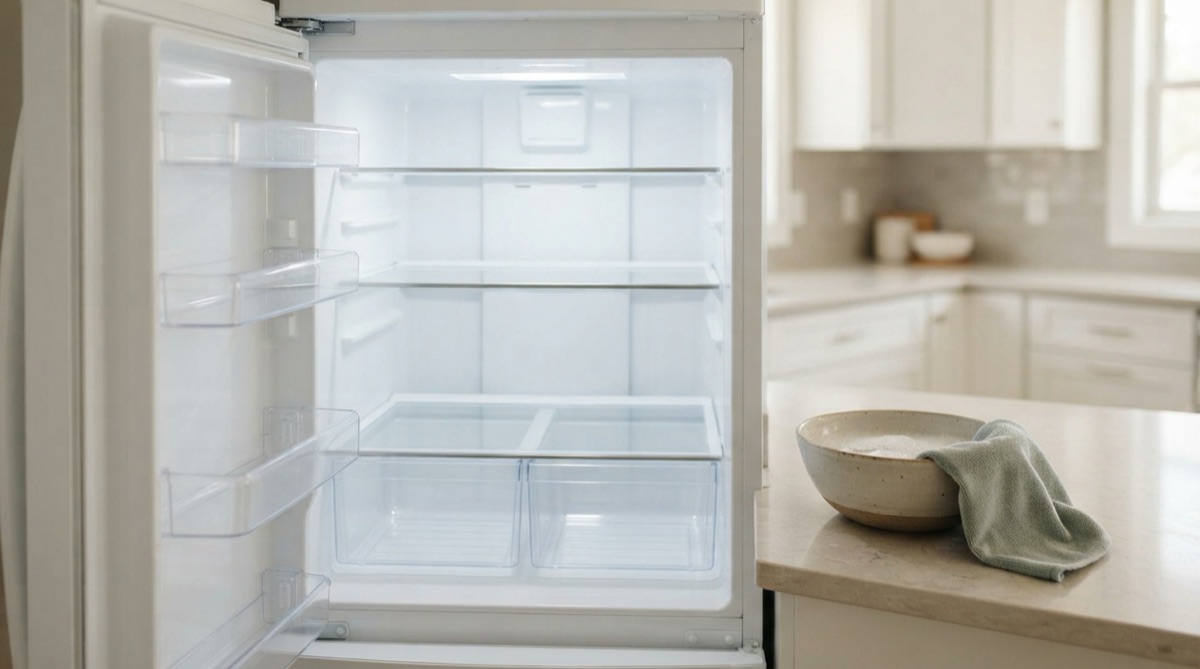
Fridge cleaning, quick answer: sort, wash, dry, then chill
Fridge cleaning is easiest when you move cold food out first, wash removable parts, wipe the inside from top to bottom, and dry every surface before food goes back. Keep the freezer closed as much as possible, and treat the whole job like food safety work with a cleaning finish.
Key takeaways
- Keep perishables cold while you work; the main box should stay under 40°F and the freezer should sit at 0°F (Energy.gov).
- Start with the refrigerator, then the freezer. You spend fewer minutes with both doors open.
- Dry every shelf, bin, gasket, and drawer before reloading.
- Low humidity is for many fruits; high humidity helps leafy vegetables hold moisture.
- Strong odor usually means a missed spill, a leaky package, old ice, or a dirty gasket.
Set up a cold holding zone
Before you pull a shelf, make a cold holding zone. Use a cooler, ice packs, frozen water bottles, or a second refrigerator if you have one. Put dairy, raw meat, seafood, eggs, cooked leftovers, cut fruit, and prepared salads there first.
Keep the refrigerator at 35°F-38°F when you can, and do not let perishable food sit out for more than 2 hours, or 1 hour when the room or outdoor temperature is above 90°F (FoodSafety.gov). That matters in Rocklin and Sacramento summer heat, when a quick grocery unload can turn into a warm-counter problem.
Work shelf by shelf if the fridge is packed. A full clean is easier after trash night or before a grocery run, when fewer containers need babysitting.
Empty and edit in zones
Take food out by area: door, top shelf, middle shelves, lower shelf, drawers, then freezer. This keeps the reload cleaner because you already know where each item belongs.
Check for sticky lids, loose produce bags, cracked takeout boxes, old sauce jars, and anything with a wet ring on the bottom. Wipe each container before it goes into the cooler or before it returns to the fridge.
This is also a good time to pair the job with a larger room-by-room deep clean plan. The fridge is one of those spots people skip because the door hides the mess until odor gives it away.
Wash shelves, bins, and the interior
Let cold glass shelves warm up before washing them. Sudden hot water can crack cold glass, and drawers are easier to clean when they are not icy-cold in your hands. A mild soapy wash, a dry towel, and a baking soda odor pass cover most interior work (Bon Appetit).
- Move perishables to the cold holding zone.
- Pull removable shelves, drawers, bins, and door inserts.
- Shake loose crumbs into the trash.
- Wash removable parts with warm water, mild dish soap, and a soft sponge.
- Wipe the interior walls, shelf rails, ceiling, and floor of the fridge.
- Clean the gasket folds with a damp cloth so crumbs do not break the seal.
- Use baking soda and warm water on lingering food odor.
- Rinse food-contact areas with a clean damp cloth, then dry everything fully.
Whatever cleaner you use — ours are non-toxic by default — food-touch surfaces need a clean rinse and a dry finish before anything goes back in. Damp corners can turn a clean fridge into a stale-smelling fridge by the next morning.
Clean a freezer without turning food soft
Freezer cleaning works best in short passes. Pack frozen food tightly in a cooler, then clean one shelf or bin at a time. If you have loose ice, crumbs, peas, coffee grounds, or bread clips in the bottom, use a dry towel or handheld vacuum before adding any moisture.
Do not chip thick ice with a knife. You can puncture a liner or damage a shelf. If ice buildup is heavy, move the food to a cooler, follow the appliance manual, and give the freezer time to defrost the right way.
For light messes, wipe sticky spots with a warm damp cloth, then dry the surface. Close the freezer door between passes. A closed full freezer can hold a safe temperature for about 48 hours during a power outage (FoodSafety.gov), but an open door wastes that buffer fast.
Put food back by temperature and spill risk
| Zone | Best for | Why |
|---|---|---|
| Door shelves | Condiments, juice, butter | Warmest spot; survives temperature swings |
| Upper shelves | Leftovers, drinks, ready-to-eat food | Steady temperature |
| Lowest shelf | Raw meat, poultry, seafood in a tray | Coldest zone; drips cannot fall on other food |
| Crispers | Produce by humidity setting | Two-thirds full (low), three-fourths full (high) |
Reload the coldest and riskiest foods first. Raw meat and seafood belong low, sealed, and away from ready-to-eat food. Leftovers should be covered and dated if they are easy to forget.
The door is better for condiments and drinks than milk, eggs, or meat. Door shelves warm up more because they move every time the fridge opens. Keep the foods you reach for most near the front so the door is not open while everyone hunts.
This is where a weekly cleaning schedule helps. A 5-minute Friday sweep for leftovers, produce, and sticky jars prevents a 90-minute clean later.
Use the crisper drawers on purpose
Fridge humidity control is not decoration. A low-humidity drawer lets more air move, which helps fruit that releases ethylene gas. A high-humidity drawer holds moisture for produce that wilts, and Energy.gov notes that low-humidity drawers are often best kept about two-thirds full while high-humidity drawers work best around three-fourths full.
Use one drawer for many fruits, such as apples, pears, and stone fruit. Use the other for leafy greens, herbs, broccoli, carrots, and other vegetables that dry out fast. Keep bruised fruit out of the drawer because one soft piece can spread odor and juice.
Sacramento-area produce can bring dust, grit, and oak pollen into the bins during dry weeks. Brush or rinse produce before storing when needed, then dry it well so water does not pool under the drawer.
Keep odors from coming back
Odor control starts with dry surfaces and closed containers. Open bowls, torn bags, and half-covered leftovers send smells through the air path and into ice. If the ice tastes stale, empty the bin, wash it, dry it, and let the freezer run with clean storage.
Wipe jars before they go back. Mustard lids, jam rims, salsa threads, and syrup bottles are small messes that spread every time someone grabs them. Hard-water spots around dispenser trays in Rocklin and Granite Bay homes also need regular drying so mineral film does not trap grime.
For busy kitchens, add refrigerator checks to kitchen deep cleaning instead of waiting for odor. If you want the appliance interiors handled with the rest of the kitchen, oven and refrigerator cleaning is the better fit.
When to book kitchen help
Call for help when the fridge has a sour smell after cleaning, a sticky spill under fixed glass, old freezer leaks, move-out pressure, or a kitchen reset that includes the oven, cabinets, counters, and floors. Those jobs take longer because every surface around the appliance has picked up crumbs, grease, or dust.
If you are cleaning before a move, after guests, or after a long stretch of takeout containers, the refrigerator is usually only one part of the kitchen problem. A clean cold box feels better when the handles, nearby counters, floor edge, and trash area are clean too.
If the fridge was the easy part and the rest of the kitchen is the real project, get a kitchen-reset estimate and we will bring the checklist.