
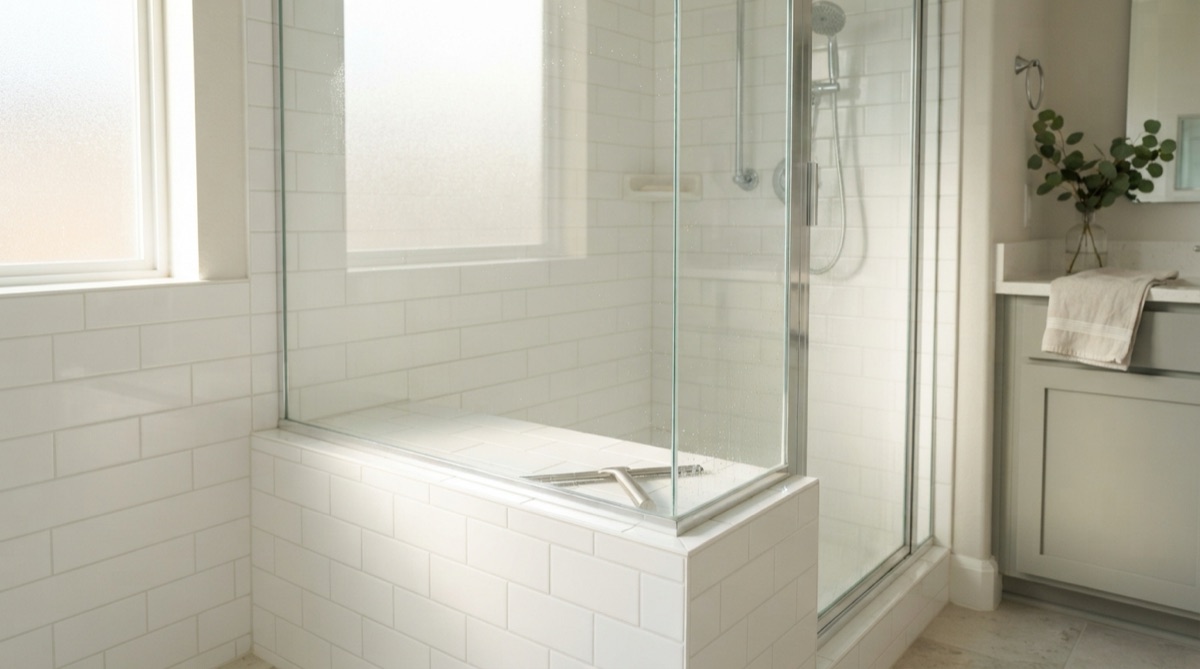
The working sequence is spray, loosen, rinse, and dry
Using vinegar for mold in shower grout can help with light mildew on sealed tile, glass, and intact caulk, but it will not fix a leak, failing grout, or growth behind the wall. Spray the spot, let the cleaner soften the film, scrub the growth off, rinse, and dry the shower. If the patch is large, keeps returning, or comes with a musty wall smell, treat moisture as the main problem.
Key takeaways
- Size the patch first. Mold over about 10 square feet is usually outside a simple homeowner cleanup (EPA).
- Remove the growth. Killing mold is not enough if residue stays on the surface.
- Use vinegar only on compatible surfaces. Skip it on marble, limestone, travertine, and damaged grout.
- Protect your lungs and skin. People with asthma, allergies, immune suppression, or lung disease should not handle mold cleanup (CDC).
- Dry the shower after cleaning. New mildew needs moisture, soap film, and time.
Before you start, size the problem
A few spots on grout or caulk are usually a shower-cleaning job. A broad patch, a soft wall, or staining that spreads from behind trim is different. If you are not sure whether you are seeing mildew or a deeper colony, compare the signs in our mold vs. mildew guide before you scrub.
Look around the shower before you choose a product. Check the ceiling, grout lines, caulk seams, curtain liner, door track, drain rim, and the wall just outside the enclosure. If paint is bubbling, drywall feels soft, or the floor outside the shower smells sour, stop cleaning the surface and look for the leak.
Wear gloves before touching the area. Open a window if you have one, turn on the fan, and keep kids and pets out of the bathroom while the surface is wet with cleaner.
Match the cleaner to the shower surface
The right cleaner depends on the surface, not just the stain. Vinegar is acidic, so it can help dissolve mineral film and soap scum on many bathroom surfaces. It can also damage the wrong material.
| Shower area | Use vinegar? | Better first move |
|---|---|---|
| Ceramic or porcelain tile | Usually yes, if the grout is sealed and sound | Spray, scrub with a nylon brush, rinse |
| Glass doors | Yes | Clean the tracks too, then squeegee dry |
| Acrylic or fiberglass pan | Test first | Use mild dish soap if the finish looks dull |
| Silicone caulk | Sometimes | Replace it if stains sit under the bead |
| Natural stone | No | Use neutral cleaner or mild soap; acidic products can dull or etch stone (Natural Stone Institute) |
| Cracked grout | No | Repair the joint after cleaning nearby surfaces |
Rocklin and Roseville showers can get mineral scale fast, especially on glass and around fixtures. That chalky layer gives mildew more texture to grip, so remove scale before it turns into a dirty ledge.
The 6-step cleanup for tile, glass, and intact caulk
This process is for small surface growth on hard shower materials. Keep the bathroom aired out while you work, and do not stack cleaners. If one product does not work, rinse well and start over another day.
- Clear the shower. Remove bottles, razors, loofahs, mats, and the curtain liner if it is in the way. Toss worn sponges and scrubbers that smell musty.
- Rinse loose film. Use warm water to move hair, soap residue, and grit toward the drain. This keeps your brush from grinding debris into grout.
- Apply the cleaner. Spray white vinegar on compatible surfaces, or use mild dish soap and water where acid is a bad fit. Keep the surface damp long enough for the film to loosen.
- Scrub the growth off. Use a nylon grout brush, soft detail brush, or non-scratch pad. Work along the joint, then across it, so you lift growth from the edges.
- Rinse until the surface feels clean. Cleaner residue can leave streaks and attract new soil. Use fresh water and wipe corners where dirty liquid collects.
- Dry the shower by hand. Use a clean towel or squeegee on walls, glass, fixtures, and ledges. Leave the door or curtain open so air reaches the seams.
For a deeper look at when vinegar is the right tool, use our complete vinegar mold cleaning guide. That guide covers product limits, surface checks, and when to switch methods.
Where vinegar helps and where it falls short
Vinegar is best for light shower mildew, soap film, and mineral buildup on non-stone surfaces. FDA labeling policy says vinegar should contain at least 4 grams of acetic acid per 100 mL, which is why it behaves like a mild acid. That acid is useful on glass and tile, but it is not a magic mold fix.
Use vinegar when the surface is hard, sealed, and not stone. The scrubbing step matters most: dead mold residue can still bother sensitive people and can leave staining behind.
Do not use vinegar on marble, limestone, travertine, slate, or any stone you cannot identify. Also skip it on crumbling grout, deep cracks, metal finishes with worn coatings, and rubber parts unless the manufacturer allows it.
If the same black line returns within days, the cleaner is probably not the issue. The joint may stay wet, the fan may be weak, or old caulk may have growth under the surface.
Stained caulk and open grout need a different fix
Caulk is the part of the shower most likely to fake you out. If the stain sits on top, cleaning may work. If the bead is peeling, soft, split, or stained from underneath, replacement is the cleaner fix.
Do not seal over active mold. Remove the failed caulk, clean the joint, let it dry, and apply bathroom-rated silicone. If the gap stays damp after a full dry-out, check for a leak before sealing it again.
Grout has a similar rule. Sound grout can be cleaned and dried. Powdery, missing, or cracked grout needs repair because water can move past it. If you are preparing a rental or sale, pair shower repairs with the apartment move-out cleaning checklist so wet-room details do not get missed.
Safety moves for a small bathroom
Small bathrooms trap cleaner fumes and mold dust faster than open rooms. If you choose bleach, CDC cleanup guidance says to use no more than 1 cup of household laundry bleach in 1 gallon of water, never mix it with ammonia or other cleaners, and bring in fresh air.
Vinegar has its own mixing rule: never with bleach, never with hydrogen peroxide in the same bottle. One product per pass.
Wear gloves and eye protection for scrubbing. An N95 respirator is a smart choice when brushing visible mold because scrubbing can move particles into the air. Anyone who has asthma, strong mold sensitivity, or immune concerns should stay out of the bathroom during cleanup.
If the job feels bigger than a surface clean, use a service that can reset the room without guessing at products. Our bathroom sanitizing service is built for tile, fixtures, touch points, and moisture-prone detail work.
Keep shower mildew from returning
Mildew comes back when the shower stays damp. EPA guidance gives an ideal indoor humidity range of 30-50 percent and says to keep humidity below 60 percent when possible. In a bathroom, the habits after the shower matter as much as the cleaner.
Make this the daily finish:
- Run the fan during the shower and until steam clears.
- Squeegee glass, tile, and the lower wall edges.
- Pull the curtain closed so it dries flat.
- Move bottles off ledges so water cannot sit under them.
- Wipe the door track and corners where pink film or gray film starts.
- Fix dripping showerheads and slow drains quickly.
Dust on a wet ledge becomes food for the next mildew colony, especially in corners that never fully dry between showers.
A clean finish that stays dry
The best way to get rid of mildew in a shower is to remove the surface growth, rinse away residue, and keep the area dry enough that it cannot settle back in. Vinegar can be part of that plan on the right surfaces, but moisture control is what keeps the result.
If your shower keeps re-spotting no matter what you spray, the fix is usually airflow and routine — two things a recurring cleaning plan handles quietly. Request a free estimate — recurring corners are our specialty.