
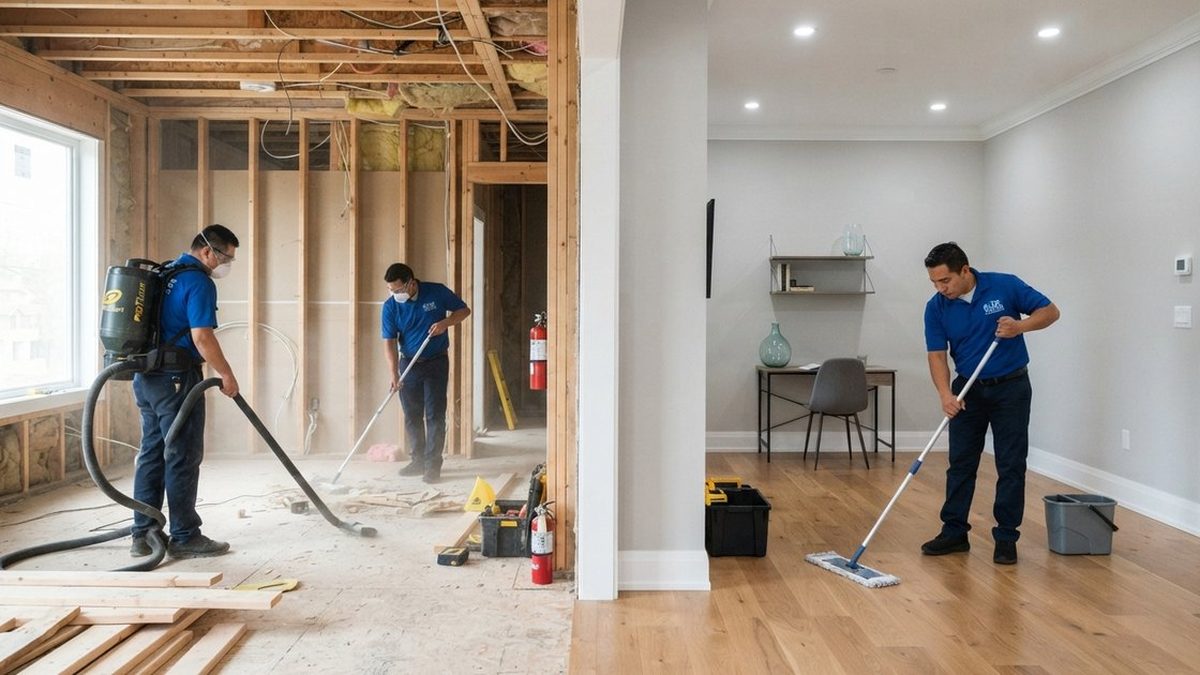
Quick answer: each level solves a different mess
The difference in rough vs final construction cleaning is timing and detail. Rough cleaning controls debris while work continues. Final cleaning details finished rooms after construction ends. Touch-up cleaning removes resettled dust and marks after the final pass.
Full builds may need all 3 levels. Remodels often need final plus touch-up before move-in. A 2-3 bathroom final clean often takes 4-6 hours. Full-home work often takes 6-10 hours. See the post-construction cleaning guide for the full process.
Side-by-side comparison
Use the next event to choose the cleaning level. Workers need a safe, open site. Inspectors need visible finishes. Owners and buyers need clean glass, fixtures, cabinets, and floors.
| Cleaning level | When it happens | Main work | What it does not promise | Best next step |
|---|---|---|---|---|
| Rough clean | During construction, after heavy work pauses | Approved light debris, packaging, loose dust, work paths, broad surfaces | Move-in-ready detail | More trade work or inspection |
| Final clean | After construction and major punch work end | Fine dust, cabinets, fixtures, glass, trim, bathrooms, floors | Protection from later dust or traffic | Photos, walkthrough, or closed site |
| Touch-up clean | After final cleaning and late visits | Settled dust, smudges, touch points, glass, floors, repaired areas | A new full final clean after major work | Move-in, listing, or owner handoff |
Ask for tasks and exclusions in writing. One company may include light label removal while another does not. The task list tells you more than the phase name.
What happens during a rough clean?
A rough clean controls loose dust and approved light debris while trades remain on site. Drywall and joint-compound dust often collect along floor edges, doorways, and work paths.
A rough construction cleaning visit may cover:
- Loose dust on accessible floors and broad surfaces
- Approved packaging and light debris
- Edges, corners, and main work paths
- Labels or protective film named in the scope
- A basic reset before the next trade or inspection
It does not replace contractor debris removal. Scrap, nails, chemical containers, and heavy bags need the right handling. The space must be safe before cleaners enter.
Rough cleaning does not detail every fingerprint, window track, or cabinet corner. More dust will appear as work continues. Wait until cutting, grinding, drilling, and sanding pause. For mineral dust, follow OSHA construction silica guidance.
What happens during a final clean?
A final clean starts when dust-making work is over. Tools, coverings, large waste, and building materials should be gone. Water, power, and lights must work. Cleaners need access to every agreed room. A 2-3 bathroom home often takes 4-6 hours. A full home often takes 6-10 hours.
The final construction cleaning level can include:
- High-to-low dust removal from ledges, trim, doors, shelves, and fixtures
- Cabinet fronts and agreed interiors
- Counters, sinks, tubs, showers, toilets, and faucets
- Interior glass, mirrors, sills, and listed tracks
- Baseboards, floor edges, vacuuming, and damp mopping
- Fingerprints, smudges, and light safe-to-remove residue
Final cleaning is slower because new finishes need care. Grit can scratch, water can harm wood, and strong products can haze stone, metal, paint, or coated glass. Share care notes first.
Fine construction dust also hides. It sits on door tops, vents, registers, and closet rods. It also reaches cabinet corners, window tracks, and hinges. Use a HEPA vacuum before damp microfiber wiping. This order keeps loose dust from becoming gray paste.
What happens during a touch-up clean?
A touch-up clean protects the final result. Fine dust can resettle for 1-2 weeks after the crew leaves. Inspectors, contractors, and owners can add shoe marks and fingerprints. One drywall repair can also create a new dust zone.
The touch-up construction cleaning level usually checks horizontal surfaces, glass, fixtures, touch points, entry paths, floor edges, and areas near a late repair. It is a focused pass when the site has stayed controlled.
A touch-up can turn into a larger job if someone sands drywall, cuts tile, drills concrete, or tracks materials across clean floors. Share what happened after the final clean. That keeps the new scope clear.
Which construction cleaning level do you need?
Choose by site condition and timing.
Choose rough cleaning when work continues
Book rough cleaning when heavy dust, packaging, and loose material block paths or spread into other rooms. It fits before another trade begins or before an inspection that needs clear access.
Wait until active cutting, sanding, or demolition pauses. Cleaning beside a working saw or sander does not control the source and can place people in a dusty work area.
Choose final cleaning when construction ends
Book final cleaning after major punch-list work is complete. If painters, cabinet installers, flooring crews, or tile workers still need to return, move the date or expect another visit.
Plan the final clean close to photos, inspection, or handoff, but leave time to report missed items or surface concerns.
Choose touch-up cleaning when the site changes
Book touch-up cleaning after a final clean when dust settles or people return. It is also useful when there is a gap between final cleaning and move-in.
Skip it when the space stays closed and no trade returns. The final clean should also sit close to handoff. Check 4 signs the day before: counters, dark floors, window sills, and glass.
Common cleaning combinations
Not every project follows all 3 levels. These plans cover many home projects:
| Project | Common plan | Why it fits |
|---|---|---|
| New construction | Rough + final + touch-up | Long timeline, several trades, and a formal handoff |
| Whole-home remodel | Rough as needed + final + touch-up | Dust crosses rooms and late repairs are common |
| Kitchen remodel | Final + optional touch-up | Contractor may control debris but cabinets and fixtures need detail |
| Bathroom remodel | Final + optional touch-up | Glass, tile, tracks, and fixtures show fine residue |
| Flooring project | Final + touch-up if installers return | Dust and foot traffic can reach nearby rooms |
| Pre-listing repairs | Final + touch-up before photos | The home needs clean glass, fixtures, and floors at a set time |
Final plus touch-up fits projects with a fixed handoff date. The final visit handles detailed surfaces. The touch-up catches 1-2 weeks of settling and late traffic. This plan fits Rocklin and Roseville remodels. It also works for new homes in Whitney Ranch and Fiddyment Farm.
Questions to ask before booking
Ask when the last dust-making task ends. Confirm which of the 3 levels the quote covers. Name who removes debris and which trades will return. List cabinet interiors, windows, tracks, vents, registers, and light fixtures. Mark paint, adhesive, and grout haze as included or excluded. These answers prevent a final clean from starting in rough-clean conditions.
Build the cleaning plan around the handoff
Rough, final, and touch-up cleaning are steps, not competing services. Rough cleaning controls an active site. Final cleaning details completed rooms. Touch-up cleaning restores that result after dust settles or people return.
Elite House Cleaning serves Rocklin and 29 Sacramento-area cities. That area includes Roseville, Sacramento, Folsom, and Granite Bay. The team uses HEPA vacuums and eco-friendly, non-toxic products. The company is woman-owned, insured and bonded, and has served the area since 2015. Call (916) 407-1010 to match the cleaning level to your schedule.