
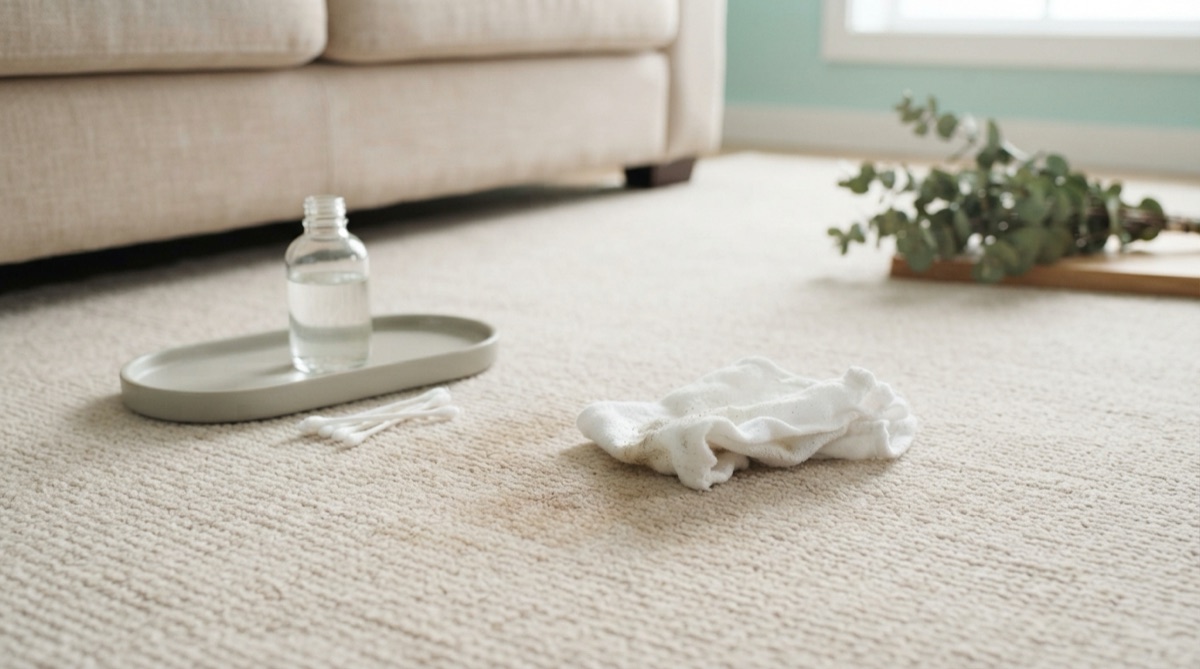
Quick answer: good on ink and residue, bad on organics
Rubbing alcohol to remove stains works best on fresh ink, marker, dye transfer, sticky residue, and some oily makeup because it can loosen pigments and oils before they set. It is not the right first choice for blood, urine, vomit, red wine, coffee, rust, bleach marks, or delicate fabric. Use it in tiny amounts, test first, blot, then rinse so alcohol does not spread the stain or damage dyes.
In Rocklin and Roseville homes, we see this most often on carpet edges, sofa arms, kids’ desks, and laundry that sat too long before anyone noticed the mark. Rubbing alcohol for stain removal can be useful, but treat it as a spot tool with a short list of safe targets.
Key takeaways
- Use 70% isopropyl rubbing alcohol; CDC notes 60%-90% solutions work best because the water content slows evaporation.
- Test a hidden area for 5 minutes, then check for color loss or dye on your cloth.
- Blot from the outside edge toward the center so the stain does not spread.
- Rinse with a damp white cloth after the stain lifts, then dry with a clean towel.
- Do not use alcohol on silk, wool, leather, suede, finished wood, or acrylic plastic.
- If the stain is large, old, or on upholstery, stop early and get a free estimate.
When does rubbing alcohol for stain removal work?
Rubbing alcohol is isopropyl alcohol mixed with water. It acts like a solvent, which means it can break up some oily binders, dyes, and sticky films.
The Centers for Disease Control and Prevention’s disinfection guideline places alcohol’s sweet spot at 60%-90% solutions in water; per the CDC, the water slows evaporation so the alcohol stays in contact with a surface longer. That contact time matters for stains too. CDC also says alcohols are flammable and evaporate rapidly, so work away from candles, burners, cigarettes, space heaters, and hot dryer parts.
The Good Housekeeping Institute Cleaning Lab said in 2026 that rubbing alcohol works best on fresh ink stains, especially oil-based ballpoint pen ink, and may help with permanent marker. That lines up with what we see weekly in client homes: fresh marks respond far better than old marks that have been dried, heated, or scrubbed.
What stains can rubbing alcohol remove?
Use this table before you touch the stain. It keeps a small fix from becoming a bigger repair.
| Stain type | Use alcohol? | Best move |
|---|---|---|
| Fresh ballpoint ink | Yes | Blot with alcohol, then rinse and launder cold |
| Permanent marker | Maybe | Test first, use cotton swabs, repeat slowly |
| Dye transfer | Maybe | Try a tiny spot; stop if fabric color lifts |
| Sticker residue | Yes | Dab, wait 30 seconds, wipe and rinse |
| Lipstick or oily makeup | Maybe | Blot alcohol first, then use mild dish soap |
| Red wine, coffee, tea | Usually no | Blot with cool water and use the right stain remover |
| Blood, urine, vomit | No | Use cold water or an enzyme cleaner |
| Rust or hard-water marks | No | Use a mineral or rust remover made for the surface |
| Bleach spots | No | Bleach removes color; alcohol cannot put color back |
Sacramento-area dust can make a wet spot look worse. If the stain sits on carpet, vacuum dry grit first when you can. Adding liquid to dry soil can make a muddy ring.
How to use rubbing alcohol to remove stains safely
The safest method is slow and boring. Do not pour alcohol straight on the stain.
- Read the care label. Federal Trade Commission guidance says covered textile apparel must have care instructions, and those instructions must warn about cleaning steps that can harm the item.
- Test a hidden spot. Dab alcohol on a seam, back corner, or under-cushion area. Wait 5 minutes, then blot with a white cloth. If color moves, stop.
- Blot loose stain first. Press with a dry white towel. Do not rub.
- Put a towel behind the stain. For clothing, place a clean towel under the stained layer so ink transfers out instead of into the back side.
- Apply alcohol to the cloth, not the item. Use a cotton ball, white cloth, or cotton swab.
- Blot for 10-15 seconds. Work from the outside edge in. Move to a clean part of the cloth each pass.
- Rinse the spot. Use a damp cloth with cool water. Alcohol left behind can keep moving dye.
- Dry and inspect. Press with a dry towel. For clothing, wash cold and check before using the dryer.
If you are dealing with a move, treat visible stains before the final walkthrough. Our move-out cleaning checklist covers the other spots landlords tend to check, like baseboards, appliances, and bathroom buildup.
Can you use rubbing alcohol on carpet?
Yes, but use less than you think. Carpet has face fibers, backing, padding, and sometimes adhesive. A small surface blot is different from soaking the whole area.
The Carpet and Rug Institute says spots and stains can affect carpet life if they are not removed promptly and properly. For carpet ink or marker, put alcohol on a white cloth and dab the tips of the fibers only. Use 3-4 light passes, then rinse with a damp cloth and dry with a towel.
Stop if the spot spreads, the carpet color lifts, the stain is larger than a quarter, or the carpet is wool. Alcohol evaporates fast, but liquid can still reach the backing if you keep adding more.
For sofas, dining chairs, and fabric headboards, the risk is higher because labels can be harder to read and cushion fill can hold moisture. If the piece matters, book upholstery cleaning instead of guessing.
Can you use alcohol on pet stains?
Do not use rubbing alcohol as the main cleaner for pet urine, feces, or vomit. These are protein and odor stains. Alcohol may reduce a surface mark, but it will not digest odor at the source.
For pet accidents, blot solids and liquid first. Use cold water, then an enzyme cleaner that is marked safe for your surface. Keep pets away until the area is fully dry.
If the spot is on a rug, sofa, or carpeted stair, do not add heat. Heat can set odor and discoloration. For safer product choices around animals, our pet-friendly cleaning service uses eco-friendly, non-toxic products as the standard.
What should never be cleaned with rubbing alcohol?
Skip rubbing alcohol on delicate or coated materials. The risk is not worth the small chance of a quick win.
Avoid alcohol on:
- Silk, wool, rayon, acetate, and vintage fabric
- Leather, suede, and nubuck
- Finished wood, painted furniture, and shellac
- Acrylic plastic, some clear plastics, and coated screens
- Rubber seals and repeated-use plastic parts
- Stone counters with sealers
- Any item labeled “dry clean only”
CDC guidance notes that alcohol can damage shellac mountings, swell or harden rubber and some plastic tubing after repeated use, and evaporates rapidly. At home, that means a short spot test is the limit. If a surface looks dull, tacky, faded, or rough after testing, stop.
For mold, skip alcohol and use the right process for the surface. Start with our guide on how to clean mold with vinegar if you are dealing with bathroom grout, window tracks, or small non-porous spots.
What if alcohol only lightens the stain?
Stop before you scrub. Lightening means the solvent moved some pigment, but more force can fray carpet fibers or push dye deeper.
For fabric, rinse with cool water and wash cold with detergent. Air dry until you know the stain is gone. Dryer heat can set leftover pigment.
For carpet or upholstery, rinse the area with a damp cloth, dry it well, and watch for a ring after 30 minutes. If a ring appears, the stain or soil wicked back up from below. That is a good time to call a cleaner, not add more alcohol.
Party stains are usually mixed stains: wine plus sugar, makeup plus oil, or soda plus food dye. If the mess is larger than a few spots, party cleanup is faster and safer than treating each mark with a different bottle.
The safer rule
Reach for rubbing alcohol only when the stain is small, fresh, and on a material that passed a hidden spot test. When you do not know the fabric, the stain source, or the care code, choose the gentler path first: blot, cool water, mild detergent, and patience.
Elite House Cleaning helps Rocklin, Roseville, Sacramento, Folsom, Elk Grove, Granite Bay, Lincoln, and nearby homes with stain-safe cleaning. Our background-checked, insured cleaners use eco-friendly, non-toxic products as the standard. For set-in carpet or upholstery stains, call 916-407-1010 or get a free estimate.