
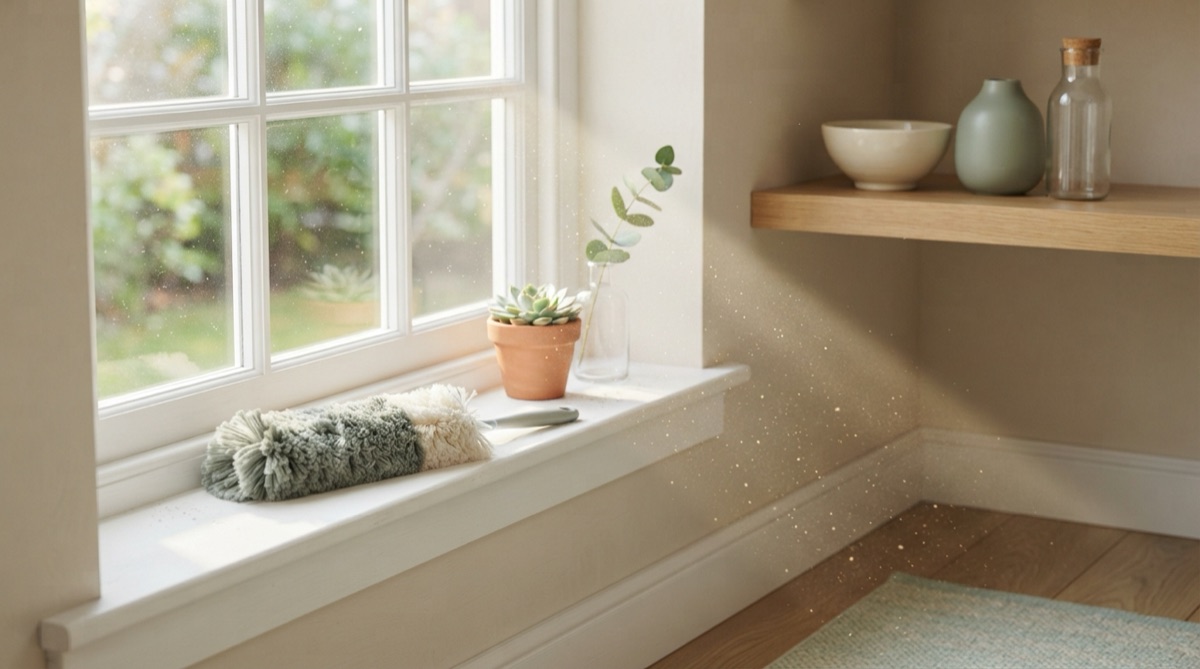
Quick answer: block, trap, wash, repeat
Where does house dust come from? It comes from outdoor grit, pollen, smoke particles, fabric lint, shed skin, pet dander, and tiny debris that settles after normal life at home. You reduce it by blocking dirt at the door, trapping airborne particles, washing dust-holding fabrics, and wiping surfaces before the layer gets thick.
Key takeaways
- Entry mats and shoe habits do more for dust control than one more pass over the coffee table.
- Dust can include PM10 and PM2.5, the 10-micrometer and 2.5-micrometer particle groups defined by the U.S. Environmental Protection Agency’s PM basics page.
- Fabric is a dust bank. Bedding, curtains, throw blankets, rugs, and upholstered furniture hold particles until they are washed, vacuumed, or shaken outside.
- Bedrooms deserve extra attention because dust mites live in bedding, padded furniture, and carpet.
- Better filters help, but they do not clean shelves, blinds, baseboards, or floors for you.
- A weekly dust routine is enough for many homes; pets, open windows, nearby construction, or summer dust can shorten that cycle.
What is actually in the dust layer?
House dust is not one thing. It is a moving mix of outdoor particles, indoor fibers, skin flakes, pet debris, food crumbs, soil, pollen, and small particles from cooking, candles, smoke, fireplaces, and nearby traffic.
Some pieces are easy to see. Others are inhalable particles, including PM10 at 10 micrometers and smaller and PM2.5 at 2.5 micrometers and smaller. The fine pieces matter because they float longer, settle into fabric, and move when air stirs.
That is why dust feels different by room. A bedroom has more skin flakes, bedding fibers, and mite material. A kitchen has crumbs, cooking residue, and cabinet-top film. A front room near the door gets grit, pollen, and soil before the rest of the house does.
Where does house dust actually come from?
Clean rooms get dusty because dust is still being made, carried in, and lifted back into the air. EPA estimates people spend about 90% of their time indoors, and indoor air carries particles from both outdoor air and daily home activity.
Walking across carpet, opening blinds, changing sheets, brushing pets, running the heater, or turning on a ceiling fan can move settled dust. Dry wiping can do the same thing. It may make the shelf look clean while sending the lightest particles somewhere else.
This is also why the right schedule beats random panic cleaning. If dust piles up every few days, use a steady room plan like our housekeeper cleaning schedule instead of waiting until the whole home looks dull.
Where Sacramento-area dust sneaks in
Watch the slider tracks and garage thresholds: Rocklin and Roseville homes with doors that open into yards, garages, and pool areas collect a fine dust edge at tracks, entry rugs, baseboards, and low window sills before any shelf shows it.
Start where the dust crosses the threshold. Keep a washable mat outside and another one inside. If shoes come off near the door, vacuum that zone more often than the rest of the room.
Garage doors matter too. Boxes, bikes, sports gear, pet items, and car mats carry grit into the laundry room or hallway. A five-minute edge vacuum in that zone can keep the dust line from moving through the house.
The lower-dust home plan
Dust prevention works best when each path gets one small control. A filter handles airborne particles. Mats handle grit. Laundry handles fabric. Damp cloths handle settled dust without throwing it back into the room.
For central HVAC, the air-cleaner guide recommends MERV 13 or the highest-rated filter your system can handle. MERV 13 and higher filters must show at least 50% removal efficiency for the smallest particles tested, but only while air is moving through the system.
Bedrooms need one extra control: mites. For dust-mite exposure, the American Lung Association recommends keeping homes below 50% humidity and washing bedding weekly in hot water of at least 130 F.
| Dust path | Change that helps | Good pace |
|---|---|---|
| Front door and garage entry | Use 2 washable mats and remove shoes inside | Shake or vacuum mats weekly |
| Bedroom fabric | Wash sheets, pillowcases, and washable throws | Weekly |
| Pet zones | Brush pets outside when possible and vacuum favorite spots | 1 to 2 times a week |
| HVAC return and vents | Use the best filter your system allows and replace it on schedule | Check monthly |
| Baseboards and floor edges | Vacuum first, then wipe with a damp microfiber cloth | Every 2 to 4 weeks |
| Open shelves and electronics | Use a lightly damp microfiber cloth, then dry if needed | Weekly |
Edges are easy to miss because they are not at eye level. For trim and floor lines, use the standing method in our guide to cleaning baseboards so the job does not turn into a hands-and-knees project.
How often should you dust?
Dust most busy rooms once a week, then adjust by what you see. If a finger swipe leaves a clear line after 3 or 4 days, dust sources are still active near that room.
Bedrooms, desks, TV stands, nightstands, bathroom counters, and dining surfaces usually need the weekly pass. Baseboards, blinds, ceiling fans, door tops, and vent covers can often wait 2 to 4 weeks. Homes with pets, open windows, kids, or heavy yard traffic may need a shorter cycle.
If you are building a starter routine, pair dusting with a full room order. The room-by-room cleaning checklist keeps dusting, floors, bathrooms, and kitchen work from competing for attention on the same day.
What to avoid when dust keeps coming back
Do not start with a dry feather duster. It moves dust around more than it removes it. A microfiber cloth that is barely damp traps more particles and leaves less floating in the light.
Do not ignore the vacuum filter. A packed canister, dirty filter, or worn brush roll can leave fine dust behind. Empty the vacuum before it is full, rinse washable parts only if the manual allows it, and let every part dry before reassembling.
Skip scented dust sprays as the main fix. Fragrance can make a room smell clean while the same lint, pollen, and grit sit on the surface. If you need a product, choose one that fits the material and use less than you think.
When it is more than normal dust
Normal dust returns slowly and evenly. A sudden gray film, black streaks near vents, sandy grit near one wall, or dust that returns right after cleaning can point to a different source.
Check for nearby construction, a failing door sweep, dirty duct work, fireplace soot, a loose dryer vent, pest activity, or a remodel area that was not sealed. After a move, renovation, or long open-window stretch, keep the reset simple so you do not buy products you will not use again.
For routine dust control, Elite House Cleaning can fold bedrooms, bathrooms, floors, baseboards, and entry areas into recurring maid service with an insured local team. That is useful when dust is not a one-time mess, but part of how the home is used every week.
Make the house easier to keep clean
Dust never goes away for good because people, pets, clothes, air, and outside soil keep making it. The win is making less dust land, then removing what lands before it spreads.
Start with the door, the bedroom, the filter, and the weekly wipe-down. Two weeks of that routine tells you whether the house needs a habit or a full reset first.