
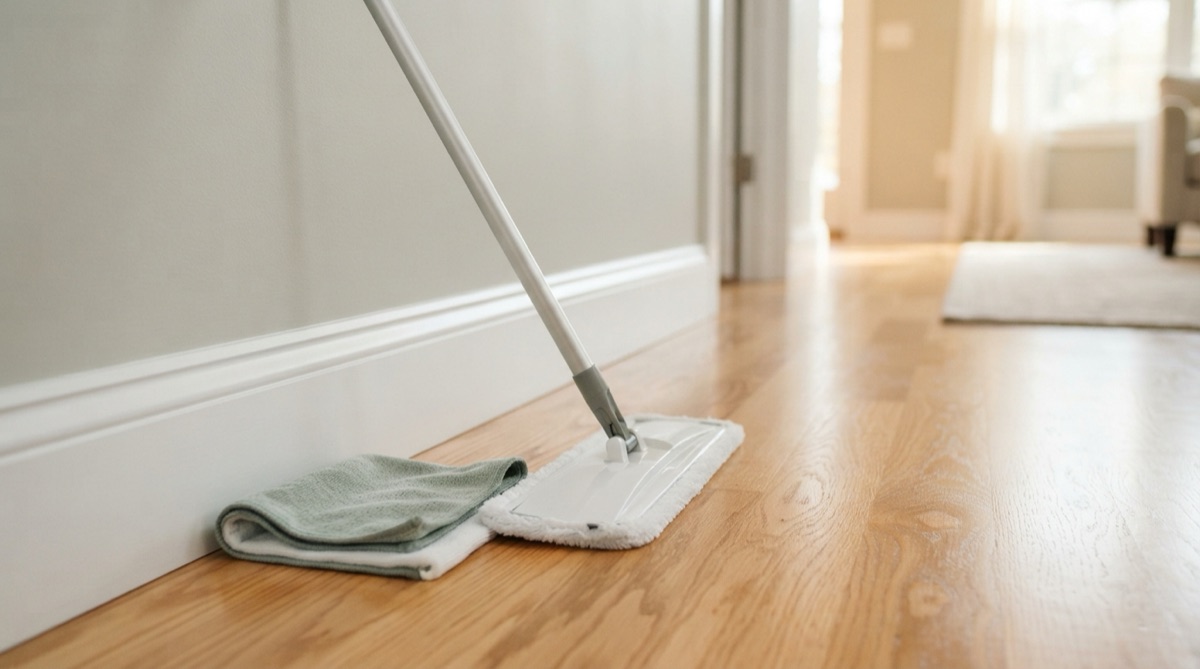
The upright answer is dry, damp, dry
The best way to clean baseboards is to remove loose dust first, wash with a barely damp microfiber tool, then dry the trim before soil settles back in. You can do most of the work standing up if you use the right handle, a light soap mix, and a small brush only where the mop cannot reach.
Key takeaways
- Start dry. Wet dust turns into gray streaks fast.
- A flat microfiber mop handles most long, straight runs while you stand.
- Warm water with a drop of dish soap handles routine trim; use less than you think.
- Detail brushes work best on grooves, corners, and shoe marks.
- Dry the baseboard edge before furniture goes back, especially near wood floors.
Set up the standing tools first
Baseboards are awkward because they sit where dust, hair, floor grit, and shoe marks meet. The easy setup is small: a vacuum with a brush attachment, a flat microfiber mop, a bucket of warm water, mild dish soap, dry microfiber cloths, and a soft detail brush.
If you already keep a basic kit, you likely have almost everything. Our cleaning supplies list is a better guide than buying a special baseboard gadget you may use twice.
Watch the thresholds: sliders, entry halls, and vent lines build a scuff-and-grit stripe along the bottom inch of trim before the rest of the wall shows anything. Dry removal matters there because grit smears when the first pass is wet.
Choose what to clean baseboards with
For routine grime, mix about 1/4 teaspoon of mild dish soap into 2 cups of warm water and wring the pad until it is damp, not dripping. That ratio is what our crews use on painted trim: enough soap to cut hand oils and light grease, little enough that no rinse pass is needed.
Two baseboard-specific cautions. Melamine sponges (“magic erasers”) are micro-abrasives — they erase scuffs fast but can dull semi-gloss and satin trim paint, so keep them for spot work and follow with a damp wipe. And on stained or waxed wood trim, skip soap entirely; use a barely damp cloth or a tack cloth so the finish keeps its seal.
Baseboards are low-touch surfaces, so disinfectant is rarely the first move — soap and scrubbing do the real work (CDC). For picking the wider product kit, our cleaning supplies list covers labels, Safer Choice, and what to skip.
How to clean baseboards without kneeling
Use this standing method for painted or sealed trim that is dusty, dull, or lightly marked. Test a hidden spot first if the paint is old, chipped, flat, or unknown.
- Move light furniture a few inches from the wall so the mop head can run straight.
- Vacuum the top lip and floor edge with a brush attachment.
- Run a dry microfiber mop along the baseboard from one end of the room to the other.
- Dip the mop pad in warm, lightly soapy water, then wring until it feels damp.
- Wipe the trim in short sections, flipping or rinsing the pad when it turns gray.
- Dry the baseboard with a clean cloth wrapped around the mop head, or kneel only for the final stubborn spots.
Do not push hard enough to flex the trim or drag grit across the paint. If the mop leaves lines, the pad is too wet or the soap mix is too strong.
Handle scuffs, grooves, and sticky spots
Scuffs need pressure in a small area, not more water across the room. Try a damp microfiber cloth first. If the mark stays, use a soft detail brush with the same mild soap mix and work only on the mark.
Grooved trim collects dust on the top ridge and inside the profile. A dry paintbrush, soft toothbrush, or cotton swab can loosen the line before the damp pass. Wipe the loosened dust away instead of brushing it onto clean flooring.
Kitchen baseboards may have tacky film near trash cans, pet bowls, or cooking areas. Let the damp cloth sit on the sticky spot for a few seconds, then wipe and dry. Skip abrasive pads unless you are ready to test for dulling first.
Match the method to the baseboard material
Painted semi-gloss trim is usually the easiest to wipe. Still, avoid soaking it because water can find nail holes, caulk gaps, and chipped edges.
Stained wood needs a gentler plan. Use a wood-safe cleaner or the finish maker’s care instructions, and keep water away from raw edges. If the cloth picks up color, stop.
Medium-density fiberboard can swell when moisture sits on seams or damaged corners. Use the driest pad that still cleans, then dry those spots by hand. That extra minute is cheaper than replacing a swollen strip.
If the baseboards meet hardwood, keep the wet pad off the floor edge. For floor lines that need more than a trim wipe, our hardwood floor cleaning service is the safer lane.
Work baseboards into the room order
Clean high dust first, then shelves and furniture, then baseboards, then floors. If you clean floors first, the baseboard pass can drop dust right back onto the room you just finished.
For a full reset, baseboards fit naturally into a room-by-room deep cleaning plan. Pair them with door frames, window ledges, vent covers, and corners so you are not dragging tools back out for one forgotten edge.
Baseboards also belong in move-in, move-out, and guest-prep cleaning. Empty rooms make them easier to reach, and clean trim makes fresh vacuum lines look sharper.
How often baseboards need attention
Dust visible baseboards when you already have the vacuum or microfiber mop out. A quick dry pass during weekly or biweekly floor cleaning keeps the bigger wash from becoming a long job.
Plan a damp wipe every few months in normal rooms. Entry halls, kitchens, kids’ rooms, pet zones, and sliding-door areas may need it sooner. Look for gray top edges, shoe marks, and dust lines where the wall meets the floor.
If every room has buildup, do not turn baseboards into a weekend project by themselves. Add them to a broader deep cleaning service so trim, corners, floors, and reachable detail work get handled in one visit with eco-friendly, non-toxic products where the surface allows.
Last pass before the room feels finished
The standing method keeps the job small: dry dust, light wash, dry finish, then spot work only where needed. Done quarterly, it is a 20-minute lap of the house instead of an afternoon on your knees.
If your trim has moved past quick upkeep and into a full reset, request a free estimate. A clean edge around the room can make the whole floor look calmer.