
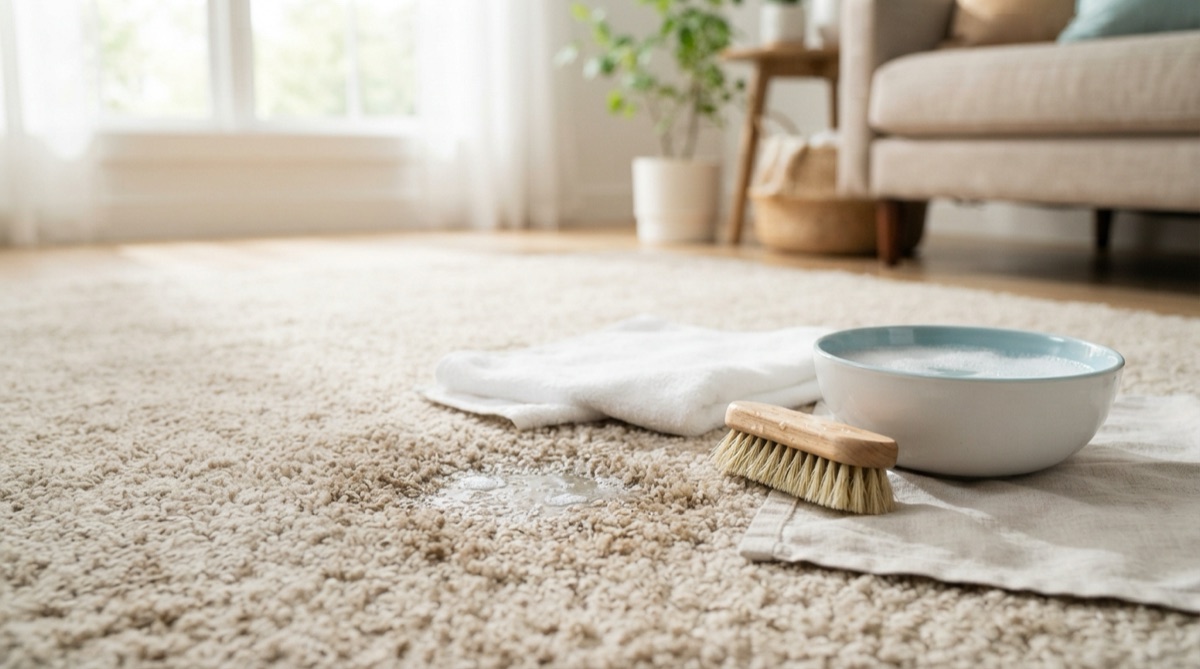
Use the 7-step blot, lift, and dry method
If you’re wondering how to clean carpet without a machine, start with dry soil removal, then spot clean, rinse lightly, and pull out as much moisture as possible. A hand method works for surface dirt, small traffic paths, and fresh spills, but soaked padding or old odors need stronger help. The Carpet and Rug Institute’s Spot Solver says prompt, proper spot removal can help protect carpet life.
Key takeaways
- Vacuum first. Dry grit cuts into carpet fibers, so remove loose soil before any wet cleaning.
- Blot fresh spills. Press straight down with white towels, then work from the outer edge toward the center.
- Use less liquid. Carpet should feel damp at the tips, not wet down into the backing.
- Dry fast, with towels first and airflow after (EPA’s mold guide sets the drying window).
- Clean before disinfecting. Soap and water remove most germs in normal home situations (CDC).
- Call for help when odor returns. That usually means the spill reached deeper than hand cleaning can reach.
Gather a small kit before you wet anything
Cleaning carpet by hand goes better when every supply is within reach. You do not need a rented shampooer for a small spot or narrow traffic lane. You do need clean towels, patience, and a way to dry the carpet after the work is done.
Use white towels or plain microfiber cloths so dye does not transfer. Keep a dull spoon, a vacuum, a spray bottle, clear dish soap, cool water, baking soda, and a fan nearby. Gloves help when the mess is food, pet soil, or anything with body fluid.
Test the cleaner in a hidden corner first. Press a damp white towel on the spot for a few seconds. If color transfers, stop and use dry blotting only until a carpet cleaner can check the fiber.
The no-machine steps for wall-to-wall carpet
The best hand method is slow and low-moisture. More soap does not make the carpet cleaner — it leaves residue that grabs dust and makes the same area look dirty again. On recurring visits, the spots we get called back to are almost always the over-soaped ones, not the under-cleaned ones.
- Clear the area. Move small furniture, cords, shoes, and baskets so you can see the whole spot.
- Vacuum dry soil. Go over the area in two directions, especially near doors, where dry-season grit collects fastest in this area.
- Lift solids first. Use a spoon edge to pick up mud, food, or thick spills before touching the fibers with water.
- Blot liquid. Press a towel straight down, switch to a dry section, and repeat until the towel stops picking up moisture.
- Mist a mild solution. Mix 1 cup cool water with 1 small drop of clear dish soap, then mist the towel instead of the carpet.
- Rinse with a damp towel. Plain water removes soap film. Use gentle pressure instead of hard scrubbing so the pile does not fuzz or spread.
- Dry under weight. Lay dry towels over the area, press with your hands or a clean heavy object, then run a fan until the pile feels dry.
Check the carpet after it dries. If the spot feels sticky, rinse again with a barely damp towel. If the stain looks lighter but still visible, repeat once instead of soaking it.
Match the cleaner to the mess
Fresh spills need a different plan than old mystery marks. Start mild, then move up only if the fiber handles the test spot. For cloth furniture with the same blot-first approach, use our guide to cleaning a fabric sofa without damage.
| Problem | Start with | Avoid |
|---|---|---|
| Mud or tracked-in dirt | Let it dry, vacuum, then spot clean | Rubbing wet dirt deeper |
| Juice, coffee, or tea | Cool water, then mild soap on a towel | Pouring cleaner onto the carpet |
| Grease or ink | Check solvent safety first | Guessing with alcohol on delicate fiber |
| Vomit or pet soil | Remove solids, blot, then use an enzyme cleaner | Bleach, ammonia, or hot water |
| Old traffic gray | Vacuum slowly, then hand clean a small lane | Trying to wash a whole room by hand |
For solvent stains, read the limits in our rubbing alcohol stain removal guide before using alcohol on carpet. For stomach messes, the steps are more specific; our vomit cleanup guide covers odor control and safer removal.
Household bleach or disinfectants should never be mixed with other cleaners because the vapors can be dangerous to breathe (CDC). This matters with pet accidents because urine can react badly with harsh products. If pet-safe products and odor control are the priority, pet-friendly cleaning is the safer service path.
Dry the carpet before moisture moves down
Drying is the part many people rush. A clean-looking spot can still be damp underneath, and that moisture can reach the backing or pad. Wet materials should be dried within 24-48 hours, and indoor humidity is best kept around 30-50 percent when possible (EPA).
Use towels first because they pull water out instead of pushing it around. Stand on a folded towel, switch to a dry one, then repeat until the towel comes up barely damp. After that, use a fan, open interior doors, and keep people off the spot.
Do not put furniture back on damp carpet. Wood legs can stain the pile, and metal feet can leave rust marks. If you must move a piece back, place foil or plastic under the legs until the carpet is fully dry.
Know the limits of no-machine cleaning
Hand cleaning is best for small zones. It can freshen a hallway path, remove a new spill, or lift a light surface mark. It is not the right tool for a whole room that feels sticky, smells sour, or has stains that keep returning.
The return of odor is a clue. It often means the spill reached the backing or pad, where towels and surface cleaning cannot remove all residue. Old pet urine, spilled milk, and wet padding are common examples.
Call for help sooner when the carpet is wool, silk, sisal, or another delicate fiber. Also stop if the color changes during the hidden test, the carpet browns as it dries, or the spot spreads after each pass.
Hand-cleaning mistakes that make carpet worse
Most damage comes from too much force or too much liquid. Scrubbing in circles can fuzz the pile and spread the stain wider. Pouring cleaner straight onto carpet can push soil into the backing.
Skip colored towels, laundry detergent, dish soap with lotion, and strong fragrance. These can leave dye, residue, or scent that is hard to rinse out. White towels and a tiny amount of clear soap are easier to control.
Do not use heat on protein stains like vomit, blood, egg, or some pet messes. Heat can set the stain and make the smell harder to remove. Cool water gives you more room to work slowly.
Keep Rocklin carpet cleaner between washes
Prevention saves more work than any hand-cleaning trick. Place washable mats at doors, vacuum entry areas twice during dusty weeks, and ask guests to leave shoes near the door. Open-window season moves fine grit through the house fast, and carpet is where it lands.
Pets need a plan too. Keep a towel near the main door during wet weather, clean small accidents right away, and treat repeat spots as odor problems instead of surface stains. If the pet returns to the same area, the carpet may still hold residue below the pile.
For busy moving season, clean traffic lanes before boxes and furniture cover them. Empty rooms make stains easier to see, but they also make echoing odors easier to notice. Handle fresh marks before the walkthrough or before new furniture goes down.
Ask for help when the carpet needs a reset
Hand cleaning can handle small carpet problems, but deeper odor, heavy traffic lanes, and soaked spots need a real reset — usually extraction equipment and dry time you cannot fake with towels.
Before you spend another weekend fighting the same spot, get a carpet-reset estimate. We clean Greater Sacramento homes daily and can tell you honestly whether hand work or a machine is the right call.