
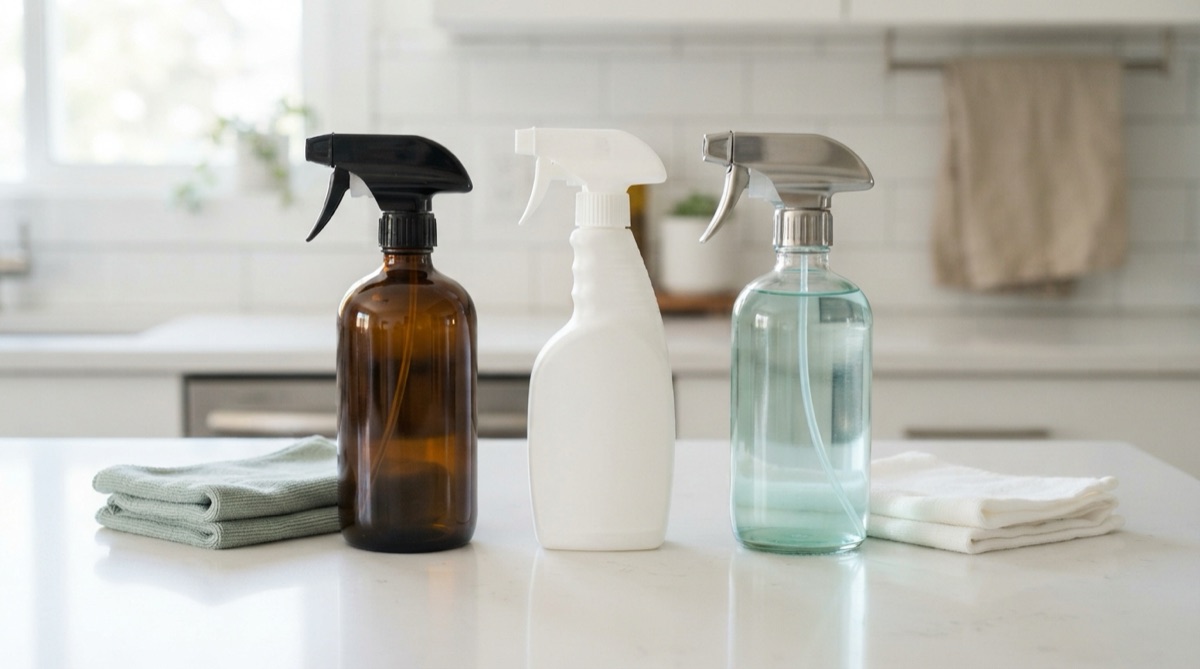
The short verdict: match the bottle to the job
Choosing between hydrogen peroxide, bleach, and vinegar comes down to the job in front of you. Use a registered disinfectant or a correctly diluted bleach solution when illness risk is the reason for cleaning. Vinegar is useful for mineral film and some grime, but it should not be the product you rely on to disinfect a bathroom, cutting-board area, or sick room. Most ordinary days, soap or detergent comes first.
Key takeaways
- Bleach is the sick-day tool for bleach-safe hard surfaces; the fallback mix is 5 tablespoons per gallon or 4 teaspoons per quart when the bottle has no directions.
- Peroxide works when the product label says it disinfects. Plain first-aid peroxide is not a free pass for every surface.
- Vinegar earns its shelf space on hard-water spots, soap scum, and some odor jobs, but it is not a replacement for a commercial disinfectant.
- Never blend cleaners. Use one product, let it sit for the contact time, then rinse or dry as the label says.
What disinfecting actually means at home
Cleaning removes soil, grease, crumbs, body oils, and many germs by scrubbing them away. Disinfecting uses a chemical to kill germs left on a hard surface.
That order matters. A disinfectant sprayed over toothpaste, soap film, dust, or kitchen grease may not reach the surface well. Clean first, then disinfect only where the risk calls for it.
Most days, soap and water finish the job on their own; the CDC reserves disinfecting for illness in the house and similar higher-risk moments. A whole-house disinfectant routine is usually more product than the job needs.
The side-by-side choice
| Product | Best role | Watch out for | Use it when |
|---|---|---|---|
| Hydrogen peroxide disinfectant | Lower-odor disinfection when the label allows the surface | Can lighten fabric, damage some finishes, or need several minutes wet | You want a bleach alternative disinfectant with clear label directions |
| Chlorine bleach | Strong disinfection on bleach-safe hard surfaces | Fumes, color loss, corrosion, and unsafe mixing | Someone is sick, a bathroom needs a germ reset, or the label calls for bleach |
| White vinegar | Cleaning mineral deposits, hard-water spots, and soap film | Not a dependable disinfectant; can etch stone and dull some finishes | You are cleaning buildup, not trying to kill a known germ risk |
| Soap or detergent | Daily cleaning before any disinfectant | Does not make a disinfectant claim by itself | The surface is dirty but there is no illness or raw-food risk |
The label is the difference between a cleaner and a disinfectant. A registered disinfectant label tells you where the product can be used, how to apply it, whether to dilute it, and how long the surface must stay wet (EPA).
When peroxide makes sense
Hydrogen peroxide is often the easier choice when bleach smell is a problem. It can be useful on hard, nonporous surfaces if the product is sold as a disinfectant and the label lists your surface.
Do not judge by the ingredient alone. A brown bottle from the first-aid aisle, a laundry oxygen booster, and a registered surface disinfectant are not the same job. The label decides whether it is for wound care, laundry, stain removal, or hard-surface disinfecting.
Peroxide can still bleach color. Test a hidden spot on fabric, grout sealer, painted trim, and older countertops. If the label says the surface must stay wet for 5 minutes, a fast mist and wipe is just wiping.
For large-area tools, the same label logic applies. Our guide to electrostatic disinfection explains why the sprayer matters less than using a product approved for that application.
When bleach is the right answer
Bleach is useful when you need a proven disinfectant on a surface that can handle it. Bathrooms, toilet-area floors, some nonporous counters, and certain laundry loads are common examples.
Use regular unscented household bleach with 5% to 9% sodium hypochlorite for home disinfection. If the bottle has no mixing directions, the backup mix is 5 tablespoons per gallon of room-temperature water or 4 teaspoons per quart. The surface should stay wet for at least 1 minute when no other contact time is listed (CDC).
Freshness matters after mixing. A diluted bleach solution loses strength after 24 hours, so make only what you need for the job. Open a window, wear gloves if the label calls for them, and keep children away from the bucket or spray bottle.
Bleach is not gentle. It can pull color from towels, spot clothing, pit some metals, and leave a sharp smell in small bathrooms. If the room needs a deeper reset, match the product to the surface before you start.
Where vinegar still earns a spot
Vinegar belongs in the cleaning lane. It can help loosen hard-water scale, soap scum, and cloudy buildup on some glass, tubs, faucets, and shower areas.
That is useful in Greater Sacramento homes because mineral film can build up fast on shower glass and around faucets. Vinegar can help with that chalky layer before it turns into a thicker crust.
Its limit is germ control. The Harvard T.H. Chan School of Public Health says 5% acetic acid vinegar may kill some household pathogens, but it does not kill all and is not recommended as a replacement for commercial disinfectants. Use it for buildup; switch products when you need a disinfecting claim.
Vinegar can also damage natural stone, waxed floors, some wood finishes, and worn grout. If the problem is mold staining or damp material, read our vinegar vs. bleach for mold guide before soaking the area with either one.
The no-mix rules that matter
Cleaner stacking is where home disinfecting gets risky. More products do not mean more germ kill.
Bleach should not be mixed with ammonia, acids, vinegar, peroxide, drain cleaners, toilet cleaners, or other cleaning products. Washington State Department of Health warns that bleach with ammonia can make chloramine gases, while bleach with acids can give off chlorine gas.
Hydrogen peroxide and vinegar have their own no-mix rule: combined in one bottle they form peracetic acid, a corrosive irritant to skin, eyes, and lungs (USDA peracetic acid technical report). Using them as separate passes with a wipe between is fine; mixing them is not.
Use one product at a time. If you need to change products, rinse the surface if the label allows it, dry it, and give the air time to clear. Keep products in their original containers so the warnings stay with the liquid.
This matters around pet messes too. Urine can contain ammonia, so bleach is a poor first move on litter boxes, diaper pails, and fresh urine spots. Clean the soil first with a product meant for that mess.
Pick by room, not by habit
In the kitchen, start with soap or detergent after food prep. If raw meat juice touched a hard surface, use a disinfectant that is safe for that material and follow any food-contact rinse step on the label.
In bathrooms, clean off soap film before disinfecting high-touch points. Faucets, flush handles, toilet seats, light switches, and door handles matter more than spraying every wall.
In laundry, read the fabric care label before using chlorine bleach or oxygen bleach. The wrong bleach can ruin color, elastic, wool, silk, or delicate trim, and our laundry symbols guide can help decode the tag before the wash.
For routine house cleaning, use fewer disinfectants and better basics: fresh microfiber, the right cleaner for the surface, and full drying. Non-toxic products are our default on regular visits, and the eco-friendly cleaning option fits homes that want less harsh residue in daily-use rooms.
A cleaner shelf makes safer choices
Keep one daily cleaner, one bathroom disinfectant, and one specialty product for mineral buildup if your home needs it. That covers more jobs than a crowded shelf of half-used sprays.
Three bottles, three lanes: label-directed disinfectant for sick weeks, diluted bleach for approved hard surfaces, vinegar for mineral film. Keep them in their lanes and the shelf stays safe. When the routine itself is the problem, an estimate costs nothing.