
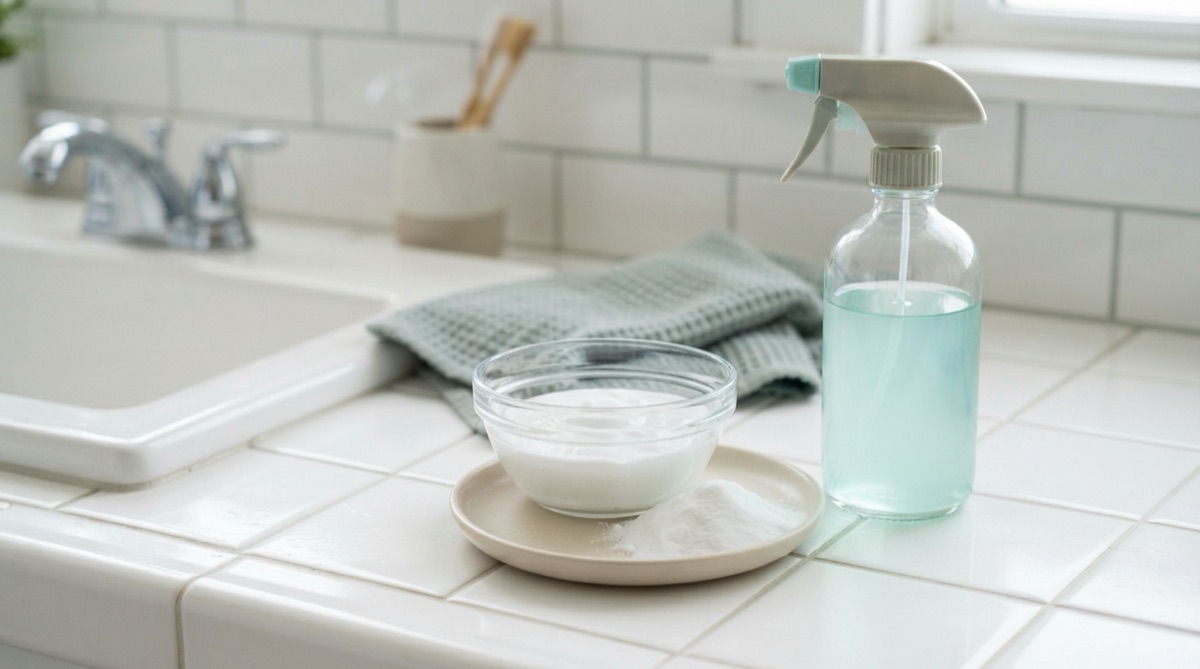
Use the paste-rinse-vinegar-dry method
Cleaning mold with baking soda and vinegar works best on small, hard, washable spots when you use the two ingredients in separate passes. Scrub with baking soda paste, rinse, wipe with diluted vinegar if the surface allows it, then dry the area fully. If the mold is large, hidden, or growing in soft material, skip the pantry method and deal with the moisture problem first.
Key takeaways
- Use the ingredients separately. Baking soda gives light scrub; vinegar is a follow-up wipe.
- Keep DIY work to small hard spots under about 10 square feet (U.S. Environmental Protection Agency).
- Wear protection before you disturb mold.
- Dry the area fully, then fix the leak, fan issue, or damp habit that fed the spot.
Where baking soda and vinegar mold removal works
This method fits small spots on sealed tile, fiberglass shower walls, vinyl, glass, plastic trim, and some painted surfaces that can be wiped and dried. It is a cleaning method for visible surface growth. It is not a repair for damp drywall, swollen baseboards, carpet padding, or a cabinet floor that stayed wet.
For bigger context on what vinegar can and cannot do, read our mold vinegar guide. If the spot is in a tub, shower door track, or caulk line, the steps in our shower mold guide may match the room better.
Use extra care on natural stone, unsealed grout, waxed wood, damaged paint, and metal finishes. Vinegar is acidic, and baking soda is mildly gritty. When the finish matters, test a small hidden area, wait for it to dry, and check for dulling before you clean the whole spot.
Before you scrub, check safety and surface
Start with the size and the person doing the work. If asthma, allergies, chronic lung disease, or immune concerns are in the home, the safer move is to keep that person away from the cleanup area. For DIY cleanup, wear gloves, eye protection, and at least a NIOSH Approved N95 respirator when mold may be stirred up (CDC).
Open a window if you can, turn on the bath fan, and keep children and pets out of the work zone. Do not run a home HVAC system if you suspect mold is inside it or right near an intake. Moving air through a moldy system can spread the problem.
Then check the material. Hard tile can usually be scrubbed and dried. Moldy carpet, ceiling tile, drywall paper, and fabric are different because growth can move into tiny spaces you cannot reach with a sponge.
Six steps for small hard-surface mold
Use this only when the spot is small, the material is hard, and the moisture source is known.
- Stop the water first. Tighten the loose showerhead, dry the window track, clear the blocked fan, or pause until the leak is fixed.
- Make a baking soda paste. Mix baking soda with a little water until it spreads like soft toothpaste.
- Scrub gently. Use a soft brush or non-scratch pad. Work from the outside of the spot toward the center so you do not smear spores across a wider area.
- Rinse and wipe clean. Use a damp cloth, then switch to a fresh cloth so you are not moving dirty paste around.
- Use vinegar as a separate pass. Spray or wipe diluted white vinegar on acid-safe hard surfaces, let it sit briefly, then wipe again. Mixed together, the acid and base neutralize into carbon dioxide, water, and sodium acetate — a salt that cleans worse than either ingredient alone — so separate passes beat a bowl of foam (The Conversation, 2024).
- Dry until the surface feels normal. Use a towel first, then airflow. Corners, grout edges, and shower tracks should not feel cool or damp when you leave.
Do not save leftover mixed paste. It dries out, picks up debris, and is easy to mistake for something else under the sink.
Put used paper towels, disposable gloves, and loose debris straight into a trash bag. Wash reusable brushes and cloths in hot soapy water, then let them dry in open air before storing them. If a gray stain remains after the surface is clean, treat it as staining unless the spot grows or smells musty again.
What not to mix or use
Never mix vinegar with bleach, ammonia, toilet cleaner, drain cleaner, or mystery sprays. If you already used one cleaner, rinse the surface, dry it, and wait before using another product. Fresh air matters even with mild pantry cleaners because vinegar odor and disturbed mold can bother sensitive airways.
Do not scrub hard with steel wool or a stiff wire brush. That can scratch tubs, shower glass coatings, painted trim, and faucet finishes. Once a surface is scratched, mineral film and soap residue have more places to grip.
Skip vinegar on natural stone and weak grout. Use a damp cloth and a cleaner made for that material instead. A small mold mark is easier to handle than etched stone or crumbling grout.
Drying is the real prevention step
Mold comes back when moisture stays. Keep indoor humidity no higher than 50% when you can, and dry wet areas within 24-48 hours after a leak or flood event (CDC). In bathrooms, that means using the fan during showers and long enough after showers for mirrors, walls, and grout lines to dry.
Rocklin and Roseville homes also see hard-water film on shower glass, tile edges, and faucet bases. That film can trap soap and body oil, which gives mold more grime to hold onto. A quick towel pass after showers does more than make the room look clean; it removes the damp layer before it turns sticky.
If the same corner grows back every week, the cleaner is not the main issue. Look for a failed caulk line, a slow leak behind the escutcheon plate, a fan that vents poorly, or a shower door track that holds water after each use.
When the spot belongs in a bigger clean
Book help when the mold is part of a bathroom that needs a full reset: soap film on walls, dark grout lines, stale floor edges, dusty fan covers, and moisture that keeps returning. Elite House Cleaning uses eco-friendly, non-toxic products for regular cleaning, but moldy rooms still need the right scope and drying plan.
For tubs, toilets, tile, and touch points, bathroom sanitizing is the service page to check. For mold tied to a leak, soft materials, or a musty wall cavity, start with repair or remediation before routine cleaning.
A pantry scrub can make a small spot look better today. The win is keeping it from coming back next week. If the bathroom needs more than a spot treatment, ask for a free estimate — recurring moisture spots are a routine part of our bathroom work.