
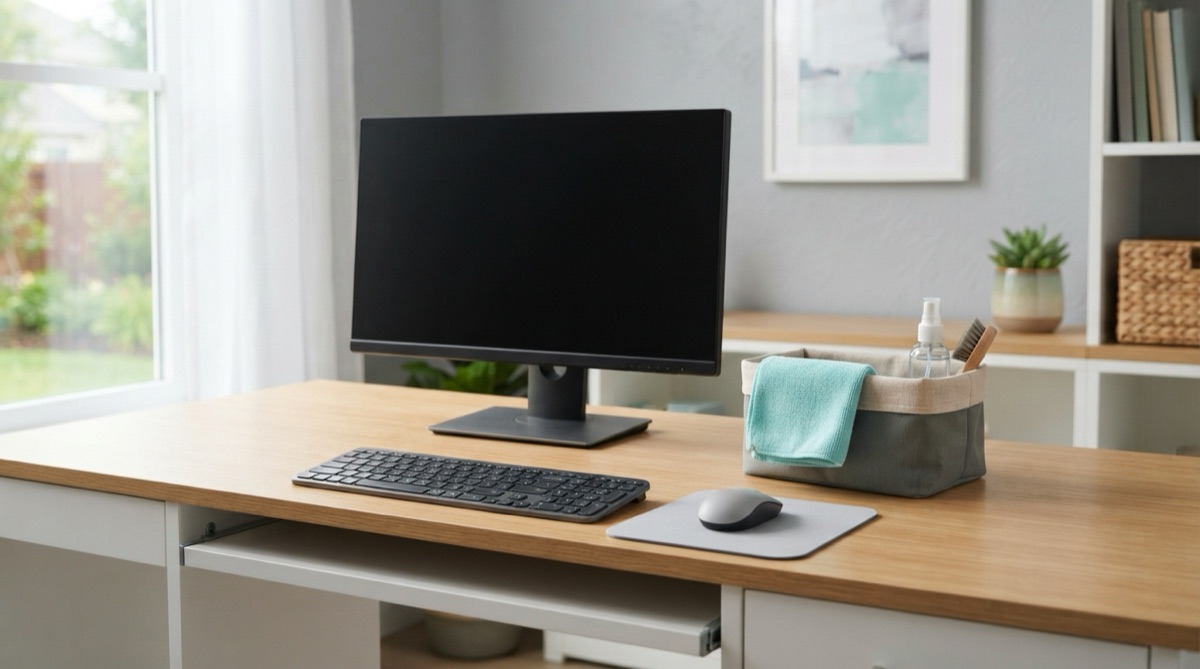
Build the route around touch, food, floors, and dust
A good office cleaning checklist separates the fast daily reset from weekly dust work and monthly detail tasks. Start with touch points, restrooms, breakroom surfaces, trash, and floors, then add deeper work on a schedule so the office never waits for a big catch-up day. The right list should match how many people use the space and which rooms clients can see.
Key takeaways
- Daily work belongs where hands, shoes, food, and trash show up first.
- Floors are a safety item; walking paths should be clean, orderly, sanitary, and dry where feasible (OSHA).
- Weekly is the dust layer: vents, blinds, chair bases, baseboards, and desk edges.
- Monthly detail work catches what people stop seeing until a client notices.
- Disinfect after cleaning when illness, heavy traffic, or a restroom mess calls for it (CDC).
- Fewer products can work well when the labels match the surface.
Daily office cleaning checklist: desks, restrooms, traffic lanes
Daily office cleaning should make the space ready for the next workday without turning into a full deep clean. Keep the route short enough that it gets finished every time. Shared spaces come first because one missed breakroom sink or overflowing restroom bin can make the whole office feel neglected.
| Area | Daily task | Watch point |
|---|---|---|
| Entry and reception | Vacuum mats, wipe door handles, spot-clean glass, empty visible trash | Keep wet entry floors dry before staff arrive |
| Workstations | Empty approved bins, wipe cleared desk space, clean chair arms if used by many people | Leave papers, laptops, and personal items alone |
| Shared touch points | Wipe switches, handles, railings, copier panels, touch screens, and shared phones | Use device-safe wipes for electronics |
| Restrooms | Clean toilets, sinks, faucets, counters, mirrors, dispensers, and floors | Refill soap, toilet paper, towels, and liners |
| Breakroom | Wipe counters, tables, sink, faucet, appliance handles, and trash area | Do not toss food unless the rule is posted |
| Floors | Spot sweep, vacuum traffic paths, mop spills, and dry wet spots | Mark or block any area that cannot dry fast |
CDC facility guidance splits surfaces two ways: high-touch gets a regular wipe, everything else gets cleaned when visibly dirty. Soil blocks sanitizers, so the wipe comes before any disinfectant — in an office that mostly means shared phones, door plates, and the fridge handle, not every desk every day.
For small offices, this daily route may take less time than debating who should do it. For a home-office or small suite that shares chores, the rhythm in our daily, weekly, and monthly cleaning schedule can help you assign a lighter version.
Weekly care for dust, chairs, and supply checks
Weekly work keeps the office from slowly getting dull. It also gives the cleaner time to reach edges that daily traffic hides, like the chair wheels under a conference table or the strip of carpet behind a copier.
Use the weekly visit for these jobs:
- Dust shelves, open ledges, window sills, partition tops, and reachable vents.
- Vacuum under movable chairs, around desk legs, and along wall edges.
- Wipe chair arms, chair backs, file cabinet pulls, and conference table bases.
- Clean interior glass, door frames, and the inside of the main entry door.
- Mop hard floors edge-to-edge, then check corners for sticky buildup.
- Restock soap, paper goods, can liners, and spare microfiber cloths.
If dust seems back by Wednesday, the problem may be entry grit, HVAC filters, or too much paper clutter around workstations. Our guide to where house dust comes from explains the same dust paths that show up in offices: shoes, fibers, outdoor air, and settled particles.
Monthly detail work that keeps the office from looking tired
Monthly detail work is slower, so keep it separate from the daily list. This is where a cleaning list for office spaces earns its keep: the cleaner can see what rotates this month instead of guessing during a busy evening route.
Add these monthly tasks when they fit the space:
- Vacuum fabric chairs and soft lobby seating with an upholstery tool.
- Detail baseboards, door frames, chair rails, and cabinet fronts.
- Clean vent faces, ceiling corners, and high ledges that can be reached safely.
- Pull light movable items from walls and vacuum the carpet edge behind them.
- Wipe breakroom cabinet fronts, refrigerator handles, and small appliance fronts.
- Clean the inside of the microwave and refrigerator if that is part of the agreement.
- Check product labels, spray bottles, gloves, and Safety Data Sheets before supplies run low.
If your office manages its own supply closet, label the shelf, keep the Safety Data Sheets in one binder by the door, and use our cleaning supplies list to decide what earns space. A labeled closet settles most product arguments before they start.
What should stay off the list?
Some office messes need a clear boundary. Cleaners should not move confidential papers, open desk drawers, handle cash boxes, or plug and unplug employee electronics unless that is in writing. Screens, keyboards, and phones also need product rules because too much liquid can damage them.
Food rules should be posted. If the cleaner is allowed to remove old fridge items, name the day and label system. Without that, the safe move is to wipe handles, clean spills, and leave food decisions to staff.
Stop routine cleaning for sharps, blood, sewage, pest droppings, heavy mold, chemical spills, or anything with a strong unknown odor. Those can require a specialty process, protective gear, or the property manager before normal service resumes.
How to split work between staff and cleaners
Shared office cleaning checklists work better when staff and cleaners are not trying to read each other’s minds. Staff should clear desks, close laptops, remove mugs from work areas, report spills, and put confidential papers away before the cleaning window.
Cleaners should own the route: restrooms, trash, floors, breakroom wipe-downs, touch points, restocks, and scheduled detail work. A manager should handle access rules, alarm codes, locked offices, supply approvals, and what to do when a room is occupied after hours.
For offices that want this off the staff chore list, our office cleaning team can set a repeat route with insured cleaners for workstations, restrooms, breakrooms, and floors. A written scope prevents the usual gray areas: plants, dishes, fridge food, personal desks, and locked rooms.
Two local notes for Rocklin-area suites
Put mat vacuuming and entry glass on the daily list — business-park foot traffic builds a dust line around the lobby faster than any other room shows wear. And plan the cleaning window around your alarm and access rules up front; after-hours lockouts are the most common reason a route gets skipped.
Breakroom sinks need attention too. Hard-water spots set around faucets and coffee stations within days, so wipe them daily and detail them weekly rather than attacking them monthly with something harsh.
Put the checklist where the mess starts
An office usually gets messy at the handoff: no one knows whether the microwave, lobby glass, supply cabinet, or conference table belongs to today’s visit. Post the list near the supply closet, keep the daily route short, and let weekly and monthly tasks catch the slow buildup.
The scope disputes we get called about are always the same five: plants, dishes, fridge food, personal desks, locked rooms. Write those five into the checklist on day one and the rest is routine — an estimate can start from exactly that list.