
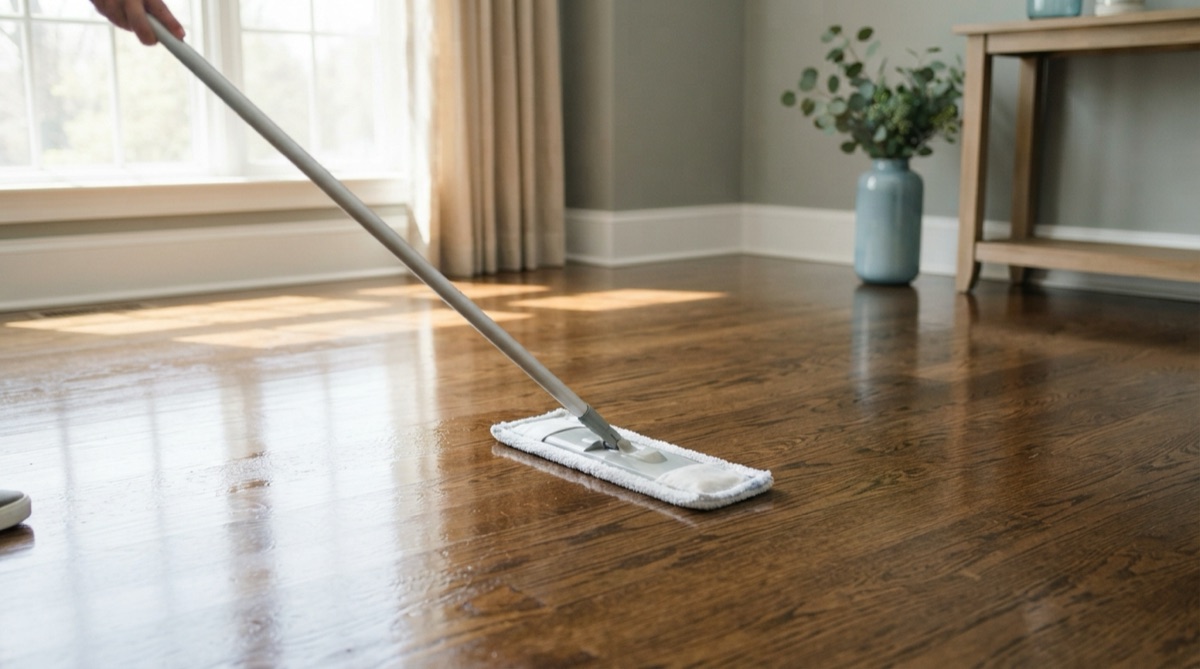
The safe order: dust, damp mop, dry, then polish
To clean and polish hardwood floors, remove grit before any liquid touches the surface. Use a soft vacuum or dust mop, a barely damp microfiber mop, and a cleaner made for the floor finish. Polish only after the floor is clean and dry, and save wax for floors that were built for wax.
Key takeaways
- Start dry. Grit under a wet pad can scratch the finish while you mop.
- The finish decides the product; sealed, waxed, and oiled floors do not all take the same cleaner.
- A flat microfiber spray mop is usually the best mop for sealed wood because it controls moisture.
- Skip vinegar, steam, bleach, ammonia, and oil soap unless the floor maker says otherwise.
- Polish can refresh a dull but intact finish. Bare wood, gray edges, black pet stains, or deep scratches need repair help.
Before you mop, identify the finish
Most newer hardwood and engineered hardwood floors have a surface finish. That finish sits on top of the wood as the wear layer. Your job is to clean that layer without soaking it, scratching it, or coating it with the wrong product.
Older floors may have wax, oil, hard wax oil, or another finish that needs different care. Wood floor wax is its own finish type and needs more frequent maintenance than many modern surface finishes (National Wood Flooring Association). If you do not know what is on the floor, check the installer notes, the flooring brand, or a hidden closet area before using polish or wax.
This matters because shine products are not interchangeable. A polish made for sealed polyurethane can make a waxed floor cloudy. Paste wax on a sealed floor can leave a slick film that later has to be stripped.
The 9-step clean-and-polish routine
Use this when the room looks dull, has shoe film, or feels gritty near doors and chairs.
- Clear small rugs, chairs, pet bowls, and floor baskets.
- Vacuum or dust mop the whole room first. Use the bare-floor setting, and do not use wet mops or steam mops because they can damage the finish and wood over time (National Wood Flooring Association).
- Work the edges. Dust lines along trim can fall back onto a clean floor, so clean the baseboard edge before damp mopping. The standing method in our guide to cleaning baseboards keeps that part from becoming a separate project.
- Spot clean sticky areas with cleaner on a cloth. Do not pour cleaner onto the floor.
- Lightly mist the mop pad or a small section of floor with a hardwood-safe cleaner.
- Mop with the grain in short passes. If the pad gets dirty, switch to a clean one.
- Dry each section with a clean microfiber pad or towel.
- Wait until the floor is fully dry before judging shine.
- Apply a compatible hardwood polish only if the finish is dull but still sealed.
The floor should never look wet for more than a few minutes. If it does, the pad is too damp, the room needs more airflow, or too much cleaner is being used.
Choose the mop before the cleaner
The best mop for hardwood is usually a flat microfiber spray mop. It spreads a small amount of cleaner, keeps the pad flat, and lets you swap pads before grime gets dragged across the room.
String mops hold too much water for most wood floors. Steam mops add heat and moisture at the same time. Scrub brushes and rough pads can cut tiny scratches into the finish, especially near dining chairs and hallway turns.
The mop matters as much as the cleaner: a microfiber pad wrung nearly dry, paired with a pH-neutral wood-floor cleaner, is the combination floor manufacturers converge on (Bona’s care guide is one example). Soft pad, low moisture, wood-safe cleaner.
If ingredient safety matters in a home with kids, pets, or sensitive noses, the non-negotiable for hardwood is pH-neutral - an ingredient-safe cleaner that is acidic or alkaline will still dull the finish.
Vinegar, wax, and steam: where floors get dull
Do not clean a hardwood floor with vinegar and water unless the flooring maker says it is safe for that exact finish. Vinegar is acidic. It may seem mild, but repeated use can dull some wood-floor finishes.
Steam has a different problem. Heat and moisture can push into seams, worn spots, and small gaps. A floor can look clean that day and still take finish damage over time.
If you are asking, “How do you wax wood floors?”, start by asking whether the floor is waxed now. True waxing is for wax-finished floors. Most sealed hardwood floors need a compatible polish for shine or a professional maintenance coat when the finish is worn.
Oil soap and furniture polish can also leave residue. If socks feel tacky after the floor dries, stop adding product and buff with a dry microfiber pad before you try another cleaner.
Polishing without a cloudy film
Polish is a wear layer, not a cleaner. It should go on a clean, dry, sealed floor after dust, food film, and old cleaner residue are gone.
Most polish labels list a traffic-based schedule - a few months for busy rooms, longer for quiet ones. Treat the label as the range, and skip the coat entirely if the floor still looks good; extra polish is where cloudy film starts.
Before polishing a whole room, test a strip in a closet or behind a door. Let it dry fully. Check it in daylight and under lamps because cloudy polish often shows more at night.
Use thin coats. Heavy polish can dry unevenly, catch footprints, and show lap marks. Keep rugs, chairs, and pet bowls off the area until the product label says the floor is ready.
Sacramento-area floor problems to watch
Rocklin, Roseville, and Greater Sacramento homes often bring in fine grit from garages, patios, pool decks, and dry yard paths - and grit in a floor seam scratches the finish the moment a damp pad pushes it around.
Start at the entry points. Washable mats at sliders, garage doors, and front doors catch more grit than one more coat of polish. If the floor keeps getting dusty within a day or two, our guide to where house dust comes from can help you cut down the source before it lands on the hardwood.
Pool traffic needs its own habit. Dry bare feet before crossing wood, and wipe drips near doors right away. Water left at a seam is harder on hardwood than a normal damp mop pass.
When cleaning stops working
Cleaning can fix dirt, film, and light haze. It cannot replace missing finish. If the floor has gray traffic lanes, raw-looking edges, deep dents, or dark stains under the surface, more cleaner will not bring the shine back.
Pet accidents are the big warning sign. If odor or a dark mark has moved into the wood, handle it as a stain problem before polishing. Start with our guide to cat urine smell in hardwood floors if the spot came from a pet.
A maintenance coat may be enough when the finish is worn but the wood is still in good shape. When scratches, dents, or bare wood go deeper, sanding and refinishing may be the cleaner repair path. That call depends on floor condition more than mop choice.
For a full-room reset, hardwood floor cleaning can help when the floor needs careful product choice, low-moisture cleaning, and a clean finish before guests, a move, or a seasonal deep clean.
Keep the shine longer
The easiest shine is the one you do not have to rebuild. Vacuum grit before it spreads, use pads under chair legs, lift furniture instead of dragging it, and keep wet shoes off the wood.
Use less cleaner than you think. A floor that dries fast and feels smooth is usually cleaner than one that smells strongly of product. Fresh microfiber pads do more for shine than extra liquid.
Hardwood rewards restraint: dry dust often, damp mop lightly, polish rarely. When traffic lanes stay dull through all three, that is a refinishing conversation, not a cleaning one - and knowing the difference is free.